The window in the Hotel Donnlatt was open on the morning of June 6th, 1874, and the curtains were fluttering in the warm breeze. By noon, a servant was knocking on the door of the suite, afraid to disturb the countess’s fragile temper, afraid to stay silent. There was no answer. When the door was finally opened, the body of Matilda, Countess of Trani, was not in the bed.
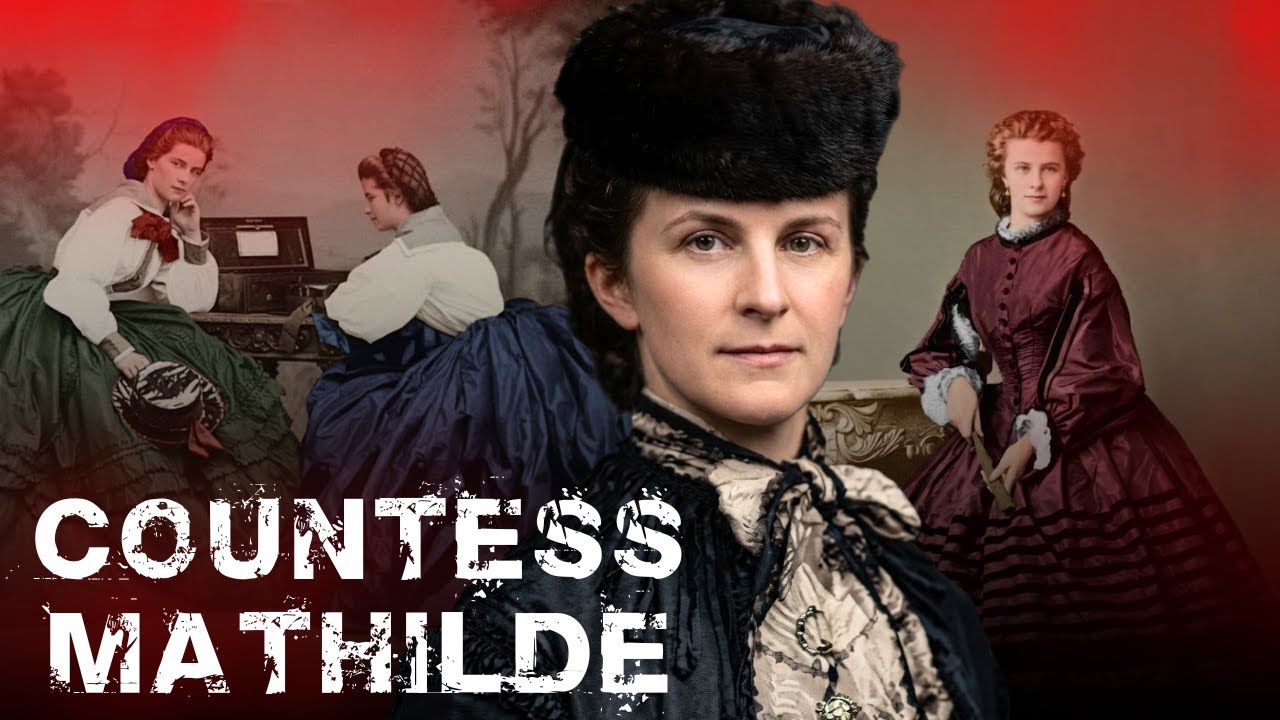
She was on the pavement below, a broken doll discarded on the stones. Some whispered accounts said poison, a vial swallowed while standing at that open window, looking out at a world she could no longer bear to touch. The method mattered less than the intent. The sister of the most powerful woman in Europe had chosen to leave.
The official story was drafted before the body was even cold. Her Royal Highness had died of heart failure. It was a lie the servants knew, the police reports quietly suppressed, and the terrified relatives understood. Matilda of Bavaria, the sparrow, had lived her entire life in the blinding shadow of her sister, Empress Elisabeth of Austria, and she had died trying to escape the same demons that hunted them both.
To understand why she jumped, or why she drank the poison, it is necessary to go back to the beginning, to the blood running through her veins. They called it the House of Wittelsbach. For seven hundred years they ruled Bavaria, ancient, proud, and undeniably cursed. History calls it the Wittelsbach eccentricity, a polite way of saying they walked a razor’s edge between genius and madness.
This was a family where reality was optional. They built fairy-tale castles on mountain peaks to avoid talking to people. They hallucinated. They heard voices.
They felt things with a dangerous, skinless intensity. Matilda was born into this beautiful, burning house on September 30th, 1843, the fourth child of Duke Max in Bavaria and Duchess Ludovika. Her arrival was not a state event. Her father, Duke Max, was rarely home.
He was a duke who hated being a duke, disappearing for months to play the zither in peasant taverns, performing circus tricks in his private riding hall, and fathering illegitimate children with a reckless enthusiasm. He taught his legitimate children that authority was a joke and that freedom was the only god worth worshiping. Her mother, Ludovika, was the opposite. She was the daughter of a king, married beneath her station to this eccentric duke.
She carried the bitterness of a woman who felt she had been sold short, and she was anxious, ambitious, and obsessed with marrying her daughters back into the high royalty she felt she had lost. This was the atmosphere Matilda breathed from the cradle: a father who ignored rules and a mother who was crushed by them. They grew up at Possenhofen Castle on the shores of Lake Starnberg. The paintings make it look idyllic, children running wild in the woods, swimming in the lake, free from the stiff etiquette of the Munich court.
But Possenhofen was not a paradise. It was an incubator for social anxiety. The children ran wild because they were feral. They weren’t taught how to be royals; they were taught how to be forest creatures.
They spoke a local Bavarian dialect that horrified the courtiers in Vienna. They were shy to the point of pain, and they panicked in crowds. In this chaotic brood, Matilda was the quiet one. Her older sister, Elisabeth, called Sisi, was the firebrand, demanding attention, difficult, complex, radiant.
Matilda was different. They called her Sparrow. Contemporaries often whispered something history has forgotten: Matilda was actually the more beautiful sister. Sisi’s beauty was sharp and intimidating; Matilda’s was softer.
She had the same cascade of chestnut hair, the same unbelievably tiny waist, the same tall, slender frame. But while Sisi looked at you with a challenge, Matilda looked at you with a plea. She was delicate, with a lung condition that made her voice breathless. She was a listener in a family of talkers.
She adored Sisi, separated by six years but souls cut from the same cloth, sharing the specific Wittelsbach curse of melancholy. Today we would diagnose it as clinical depression, anxiety disorder, perhaps anorexia. In the 1850s, they just said the sisters had bad nerves. Even as a child, Matilda had days when she couldn’t face the sun.
She would retreat into herself, wandering the lakeside for hours, terrified of strangers, terrified of the future. In 1853, the future arrived and destroyed the family’s quiet life forever. The young emperor of Austria, Franz Joseph, was supposed to marry the eldest sister, Helene. It was a done deal, a political arrangement.
But Franz Joseph arrived at the resort of Bad Ischl, saw the fifteen-year-old Sisi, and fell violently, stupidly in love. He defied his mother, defied protocol, and married Sisi. It is framed as the ultimate romance. In reality, it was a tragedy for everyone involved, especially for the sisters left behind.
Overnight, the feral children of Possenhofen were the center of European attention. Sisi was the empress of Austria, the most powerful woman on the continent. For Matilda, just ten years old, this was a catastrophe. Duchess Ludovika suddenly had a new benchmark for success.
If Sisi could catch an emperor, the other girls couldn’t just marry local German counts. They had to marry kings. The bar had been raised to the stratosphere. The poor sparrow Matilda was now a strategic asset, her value skyrocketed.
She wasn’t just a Bavarian duchess anymore; she was the sister of the empress. As Matilda entered her late teens, the pressure cooker at Possenhofen became unbearable. Sisi was in Vienna, famously miserable, starving herself, fighting with her mother-in-law, sending frantic, unhappy letters home. One would think this would serve as a warning.
Ludovika doubled down. She needed another crown, and she found one in the south. The target was the Kingdom of the Two Sicilies, the Bourbons. The Bourbons of Naples were an old, wealthy, and decaying dynasty.
They ruled the southern half of Italy with a mix of absolute tyranny and chaotic incompetence, but they were kings. Matilda’s older sister, Marie, had already been married off to the heir of this kingdom, Francesco. In 1859, Francesco became King Francis II, and Marie became queen of the Two Sicilies. Ludovika saw an opening.
King Francis had a younger half-brother, Prince Luigi, the Count of Trani. If Matilda married Luigi, it would be a triumph: two Wittelsbach sisters married to two Bourbon brothers. Sisi on the throne in Vienna, Marie on the throne in Naples, and Matilda right there beside her as a royal princess of the South. On paper, it was perfect.
In reality, it was a death sentence, because the Kingdom of the Two Sicilies was already a corpse. It was 1860. The Italian Risorgimento was burning through the peninsula. Giuseppe Garibaldi and his Thousand Red Shirts were marching south.
The people were rising up; the Bourbons were hated. Then there was Luigi himself. Count Luigi of Trani was twenty-two years old, known in the courts of Europe, but not for his valor or his intellect. He was known for his Bourbon appetites.
He drank. He visited brothels. He was sullen, cynical, and deeply, darkly depressive. He was a man who knew his world was ending and decided to get drunk and watch it burn.
Matilda was eighteen, fragile, a lover of poetry, terrified of loud noises. Her mother handed her to Luigi like a wrapped gift. The warning signs were flashing red. Sisi from Vienna tried to intervene, knowing what it was like to be married to a man you didn’t understand, but she was too far away and too wrapped up in her own misery.
The marriage contract was signed. The sparrow was sold. History had a cruel twist in store. Before Matilda could even pack her trunks for Naples, the kingdom she was supposed to marry into ceased to exist.
In late 1860 and early 1861, the Kingdom of the Two Sicilies collapsed. Garibaldi took Naples. King Francis and Queen Marie fled to the fortress of Gaeta for a last desperate stand. Matilda watched from Bavaria as her sister Marie became a war hero, walking the ramparts of Gaeta under cannon fire, rallying the troops, earning the nickname the Heroine of Gaeta.
It was glorious, and tragic, and a defeat. Gaeta fell in February 1861. The kingdom was gone. The Bourbons were deposed, homeless exiles.
This was the moment Duchess Ludovika should have called off the wedding. A contract is a contract, and the Wittelsbachs do not admit mistakes. On June 5th, 1861, in Munich, Matilda walked down the aisle. The wedding was a somber affair.
Matilda wasn’t becoming a ruling princess; she was joining the funeral procession of a fallen dynasty. She looked at Luigi. He saw a shy, boring German girl who would nag him about his drinking. She saw a stranger with dead eyes.
She wasn’t moving to a sunny palace in Naples; she was moving to Rome, to exile. Pope Pius IX had taken pity on the deposed Bourbons and given them sanctuary in the Palazzo Farnese. This is where Matilda’s married life began. The Palazzo Farnese is a magnificent masterpiece of the Renaissance, but in 1861 it was a tomb, filled with angry, bitter Italian royals who had lost everything.
The air was thick with conspiracy theories, prayers for a restoration that would never come, and the stale smell of old incense. Matilda, the girl who grew up running through Bavarian forests, was locked inside this stone box. The heat suffocated her. The etiquette was rigid.
Even in exile, the Bourbons demanded strict adherence to protocol. She had to bow, to wait to speak, to wear heavy black mourning silks for a kingdom she never even saw. She was alone with Luigi. The marriage failed instantly.
Luigi was angry at the world, angry that he wasn’t a prince anymore, just a refugee, and he took that anger out on his wife. He ignored her. He mocked her German accent. He left her alone in the palazzo for days while he disappeared into the Roman underworld, drinking cheap wine and sleeping with women who didn’t require him to make conversation.
Matilda wrote home. Her letters from this period are heartbreaking. They aren’t the letters of a young bride; they are the letters of a prisoner. “I am like a bird in a cage,” she wrote to Sisi.
“The bars are made of gold, but they are cold iron all the same. ” The depression truly took hold. At Possenhofen, Matilda’s melancholy had been a mood, a mist that came and went. In Rome, it became a solid wall.
She stopped eating. She spent days in bed with the curtains drawn. She developed a phantom cough, a psychosomatic excuse to avoid the suffocating dinners with the deposed king and queen. She was eighteen years old.
Her life was over. In Vienna, Empress Sisi was reading these letters, and she recognized the tone, the scream between the lines. Sisi realized her little sparrow was dying. In 1862, the sisters decided that if they were both going to be miserable, they should be miserable together.
They would turn their backs on their husbands and their duties and begin a frantic, desperate race across Europe, a race to outrun themselves. Cece reached out. The relationship between Sisi and Matilda wasn’t just sisterhood; it was a survival pact. Sisi was the empress, so she had the power to command, and she began to summon Matilda: come to Bad Ischl, come to Possenhofen, come to Corfu.
For Matilda, these summonses were a lifeline, the key that unlocked the prison door of the Palazzo Farnese. Count Luigi couldn’t refuse the Empress of Austria. If Sisi wanted her sister, Sisi got her sister. Matilda began to travel, and once she started, she never really stopped.
When the sisters were together, the rest of the world ceased to exist. Contemporaries described it as uncanny. They would shut themselves away in private apartments, banning ladies-in-waiting, husbands, children. They reverted to their childhood selves, speaking in a rapid-fire English dialect they had developed to keep their secrets safe from Austrian spies and Italian gossips.
They giggled, mocked the stiff courtiers, validated each other’s misery. But there was a dark side. They fed each other’s demons. Sisi was obsessed with her beauty, the one thing she could control, terrified of aging, terrified of gaining weight.
She infected Matilda with this obsession. The sisters engaged in competitive starvation, going on cures of weeks drinking only whey or cattle blood. They went on brutal six-hour hikes in heavy skirts, walking until their attendants collapsed just to burn off energy. They rode horses recklessly, jumping fences seasoned cavalry officers would refuse.
It was a frenzy, a manic attempt to outrun the depression nipping at their heels. Matilda was the weaker partner. Sisi had an iron will; Matilda just had nerves. She tried to keep up with the empress, destroying her body in the process.
She became painfully thin, and her lung condition worsened. But in the eyes of the world, they were magnificent: the Shadow Sisters, two tall, dark-haired, tragic beauties sweeping through the grand hotels of Europe, unapproachable and divine. Reality always crashes the party. Matilda had to go back to Rome.
In 1867, six years into her marriage, she finally produced an heir, a daughter, Maria Theresa. The family hoped a baby would fix things. It didn’t. Matilda was not a natural mother, and neither was Sisi.
They were women who had never been allowed to grow up themselves. Matilda looked at her daughter and saw another link in the chain binding her to Luigi. She loved the child in an abstract way, but she left the raising of Maria Theresa entirely to nannies. Luigi shrugged and went back to his mistresses.
The birth removed the last excuse for intimacy. They drifted into completely separate lives. Luigi stayed in his rooms drinking and brooding over his lost kingdom. Matilda stayed in hers writing desperate letters to Sisi, plotting her next escape.
A woman cannot live on letters alone. Matilda was young, passionate, and lonely. She needed something real, someone real. Because she was a Wittelsbach, she found him in the most scandalous way possible.
His name was Salvador Bermúdez de Castro, the Duke of Ripalda. He was Spanish, a diplomat, wealthy, cultured, and incredibly charming. He was everything Luigi was not. Luigi was a dark cloud; Ripalda was the sun.
Luigi was a deposed prince with no future; Ripalda was a man of the world who made things happen. Luigi ignored Matilda; Ripalda worshiped her. They met in the swirling social scene of the 1860s, and for Matilda it was an explosion. Ripalda was oxygen.
He listened to her. He didn’t treat her like a dynastic pawn or a broodmare. He treated her like a woman. He saw the sparrow trembling inside the royal armor and offered her a safe place to land.
The affair began, a grand passion. Ripalda arranged his diplomatic schedule to coincide with Matilda’s travels. The aristocracy of Europe wasn’t stupid. In the salons of Paris and the ballrooms of Vienna, the whispers started.
Sisi knew, of course, and she covered for them. She understood the need for escape, finding her own solace in Hungary with the dashing Count Andrássy. Sisi saw Matilda’s affair not as a sin but as a medical necessity. Ripalda was the only thing keeping Matilda alive.
The empress turned a blind eye, invited Ripalda to gatherings, normalized his presence. Luigi was a drunk, but he wasn’t blind. He had lost his kingdom, lost his status, and now he was losing his wife to a Spanish diplomat in front of the entire continent. His reaction was ugly.
There are reports of terrible arguments in the Palazzo Farnese, shouting matches echoing through the marble halls. Luigi didn’t fight for Matilda’s love; he fought for his pride. He forbade her to travel. He threatened to cut off her allowance.
But Matilda had tasted freedom, and she had the Duke of Ripalda’s money behind her. She wasn’t the scared eighteen-year-old anymore. She fought back, spending months away from Rome, effectively separating from Luigi. A legal divorce was impossible for a Catholic royal, so she lived a double life.
In Rome, she was the tragic pious countess of Trani, suffering in silence. In Baden-Baden or Paris, she was Madame Bermúdez in spirit if not in name, walking the promenades with the Duke, wearing the jewels he gave her. There is a persistent explosive rumor from this time. Historians have tried to bury it, but the rumor refuses to die.
It is said that in the late 1860s, Matilda disappeared for a suspiciously long time to a secluded estate, officially for her lungs. The rumor says she was pregnant with Ripalda’s child. Some sources claim a baby was born, a daughter named Maria Salvador, immediately taken away, hidden in a convent or given to a foster family, erased from the royal family tree. If true, it explains the desperation that followed: carrying the child of the man you love and being forced to abandon it to protect the reputation of a husband you hate.
Whether the baby existed or not, the affair with Ripalda changed Matilda. It gave her highs of ecstatic happiness, but it made the lows so much deeper, because every time she left Ripalda, she had to go back to being the Countess of Trani. She had to go back to the cage. By the early 1870s, the strain was tearing her apart.
She was living two lives, and neither felt real. She was thirty years old in 1873, her beauty sharpening into something brittle, almost painful to look at. She was thin as a rail. Her laughter was too loud, her silence too deep.
Sisi saw it. The letters between the sisters changed tone again. Sisi wasn’t just complaining about boredom anymore; she was writing about death, about the peace of the grave. Matilda was listening.
The sparrow was tired of flying. In the summer of 1874, Matilda packed her trunks for Baden-Baden. Ripalda was waiting for her. Sisi was planning to meet her.
But this time Matilda didn’t pack just her dresses. She packed her despair. In May 1874, she had made her plans. She wrote letters to old friends that sounded like goodbyes.
She visited the family crypt. She spent extra time with her daughter, Maria Teresa, the child she barely knew. It wasn’t a dramatic farewell tour. It was quiet, the behavior of someone cleaning up a room before they check out.
She arrived in Baden-Baden in early June. The chestnut trees were in bloom. The river sparkled. She checked into the Hotel Donnlatt and took a suite on the upper floor.
She unpacked. She waited for Sisi. Sisi was delayed. In that delay, in those few days of solitude, the darkness finally caught up with the sparrow.
She was alone. Ripalda was nearby, but he couldn’t be with her twenty-four hours a day. The nights were long. The silence in the hotel room was deafening.
When the door of the suite was finally opened, the official story said Matilda was found in a sudden failure of the heart, a tragedy of natural causes. That was the lie put in the newspapers, carved into the history books by a family desperate to protect its name. The truth was found in the whispered accounts of the hotel staff, in the quietly suppressed local police reports, in the terrified letters of relatives. The window of the suite was open.
Matilda was found on the pavement below. The specific method mattered less than the intent. It was not a medical event. It was an escape.
Suicide was a mortal sin, a scandal that could topple thrones. A Catholic princess, the sister of the Empress of Austria, taking her own life was impossible. So they made sure it wasn’t true. Telegrams flew between Baden-Baden, Munich, and Vienna.
The local authorities were silenced. Doctors were summoned who knew what to write on a death certificate. Heart disease, stroke, apoplexy. The diagnosis shifted, but the conclusion was always the same: natural causes, no foul play, no sin.
The hotel staff were paid off or threatened. The guests were ushered away. The blood, if there was blood, was scrubbed from the stones. The vial, if there was a vial, vanished into a pocket.
By sunset, Matilda of Trani had been rewritten. She was no longer a suicide. She was a tragic victim of a weak constitution. Empress Sisi was traveling to Feldafing near their childhood home of Possenhofen, expecting to meet Matilda in a few days, looking forward to their walks, their secret language, their shared rebellion.
The news reached her like a physical blow. Sparrow is dead. Sisi collapsed. But her grief was instantly compounded by terror.
She knew Matilda, knew the darkness they shared, knew about the affair with Ripalda, the misery of the marriage to Luigi, the crushing weight of the depression. She didn’t believe the heart attack story for a second. For Sisi, this wasn’t just the loss of a sister; it was a premonition. Matilda was her mirror.
If the mirror shattered, what would happen to the reflection? Sisi became frantic. She saw Matilda’s death as confirmation of the Wittelsbach curse. She famously said later, “We are all marked.
We just wait for the end. ” She rushed to Munich, too late to save her sister, too late to stop the cover-up. She had to play the part, to mourn the sudden illness while knowing in her gut that her sister had jumped into the void to escape the very life Sisi was still living. There was no lying in state for weeks.
They wanted Matilda in the ground as quickly as possible. Her body was brought back to Munich, dressed in the heavy silks of a royal countess, her face composed, the secrets locked behind her cold lips. She was buried in the family crypt at Tegernsee Abbey, a quiet, private vault of the Dukes in Bavaria, a burial for a family member they wanted to forget. Her husband, Count Luigi, stood by the grave.
What he was thinking is unknown: guilt, relief, or the dull hangover of a man who had long ago stopped feeling anything. The Duke of Ripalda was not there. He could not be. He had to mourn alone, far from the official grief of the family that had crushed the woman he loved.
The family stopped speaking her name. Duchess Ludovika, the ambitious mother, had lost a daughter but refused to lose her dignity. She clamped down on the family. No one was to speak of the incident.
The gaps in the record are the loudest parts of the story. The tragedy of Matilda is not just how she died. It is that she lived in a world that gave her everything except a reason to stay. Matilda was the stone.
Her death in Baden-Baden in 1874 was the splash. But the ripples spread out, washing over her daughter, drowning her husband, and eroding the sanity of her sister until there was nothing left but a shell. Maria Theresa, called Mie, was seven years old when her mother went through that window. After the funeral, she was effectively an orphan.
Her father had no interest in raising a child, especially a daughter who looked so much like the wife he had failed. Mie was passed around, raised largely by her grandmother, Duchess Ludovika, at Possenhofen. She grew up in the shadow of a secret, told the heart failure lie, but children aren’t stupid. She heard the whispers of the servants, saw the way her aunts looked at her with pity and fear.
But the curse didn’t get Mie. Perhaps because she saw the wreckage of her parents’ lives up close, she chose a different path. She married Prince Wilhelm of Hohenzollern, became a mother, and lived a quiet, respectable, mostly happy life until 1909. She was the anomaly, the one who broke the chain.
Her father, Luigi, was not so lucky. When Matilda died, his last link to reality snapped. He didn’t remarry, didn’t try to rebuild his life. He simply accelerated his own destruction, spending the next twelve years wandering Europe, a ghost haunting the same spas and hotels where his wife had once stayed, drinking to forget the kingdom he lost and the wife he couldn’t keep.
Luigi died in Paris in 1886, the official cause heart disease. The rumors in Paris were identical to the rumors in Baden-Baden: some said he threw himself into a river, others that he locked himself in a room with a bottle of arsenic. The parallel is chilling. Husband and wife, separated by life, united by the same heart disease that looks suspiciously like despair.
Matilda was the canary in the coal mine. Her suicide in 1874 broke the seal. Before her, the family eccentricities were just quirks. After her, they became a death spiral.
1886: King Ludwig II of Bavaria, Matilda’s cousin and Sisi’s soulmate, was declared insane, and days later found dead floating in Lake Starnberg along with his doctor. 1889: Crown Prince Rudolf, Sisi’s only son, Matilda’s nephew, took a gun into a hunting lodge at Mayerling, shot his seventeen-year-old mistress, Mary Vetsera, and then shot himself. When Matilda died, Sisi wrote, “The universe is shrinking. The lights are going out one by one.
” Sisi spent the last twenty-four years of her life dressed in black, the Mater Dolorosa, traveling frantically, refusing to stay in Vienna, running from the ghost of Matilda, terrified that the suicide gene was dormant inside her. She didn’t kill herself with a gun or a poison vial. She killed herself by inches, starving herself, courting danger, walking into crowds without protection, almost daring the world to hurt her. When the Italian anarchist Luigi Lucheni finally stabbed her in Geneva in 1898, Sisi didn’t scream.
She barely reacted. She collapsed as if she had been waiting for that file to close for twenty-four years. Matilda is forgotten. Sisi’s face is on chocolate boxes and coffee mugs.
She is a brand. But Matilda’s story is the key to the whole era. Sisi is the fantasy we want to believe in, the beautiful rebel who fought the system. Matilda is the reality, what happens when you don’t have the power to fight, what happens when the depression wins.
She was the shadow empress, living the same life as Sisi, fighting the same demons, but without the crown, without the guards, and without the glory. She fought alone. History is written by survivors, and the survivors decided Matilda’s death was shameful. They erased her pain to protect their prestige.
But the truth has a way of enduring. At Tegernsee today, her tomb is quiet and peaceful. There is no mention of the window, no mention of the poison, just a name and two dates. If you listen closely, you can almost hear the whisper of the wind through the Bavarian trees.
It sounds like a sigh. The sigh of a woman who finally put down a burden she was never strong enough to carry. The cage is open.
