In the early hours of February 21st, 1960, the door of a bedroom in the British colonial capital of Jesselton, North Borneo, was opened, and the people who came in found Edwina Mountbatten dead. She had gone to sleep the night before and never woken. She was fifty-eight years old, thousands of miles from the houses her money had bought and the name she had married. On the table beside the bed was a pile of old letters.
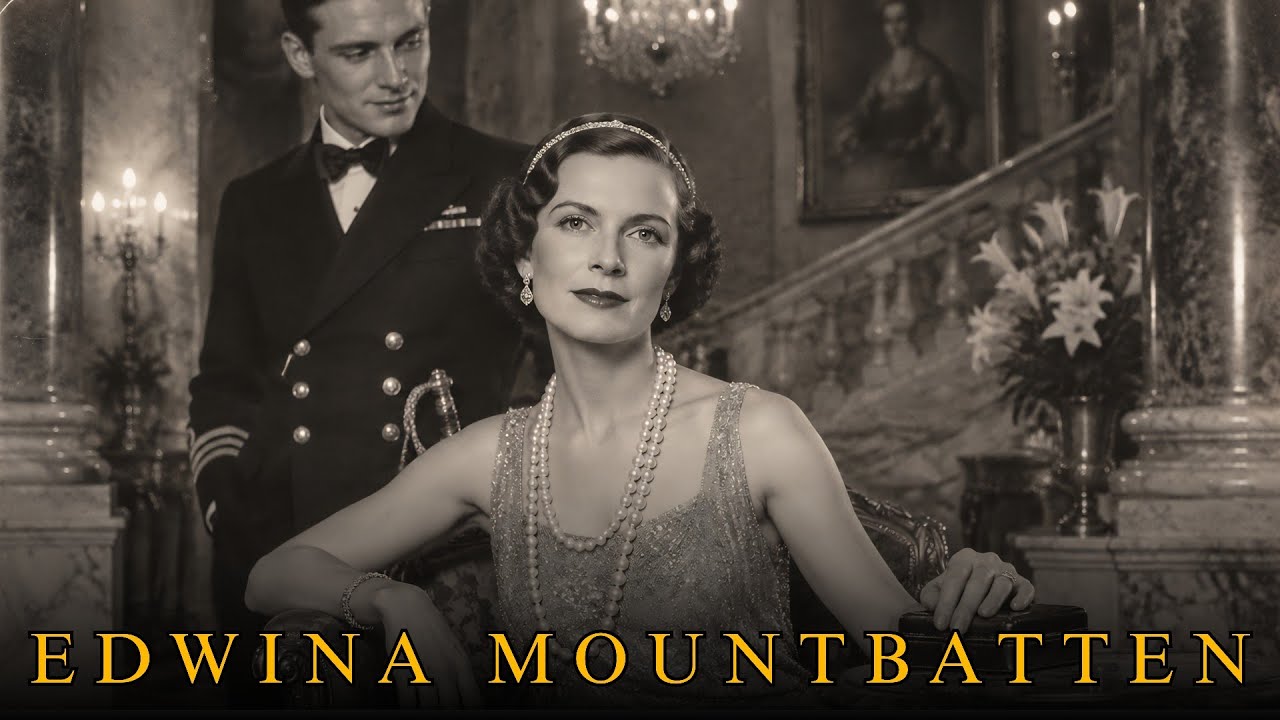
A few, the ones she had been reading, had fallen across the bed itself. Those who found her reported that every one of them was from Jawaharlal Nehru, the Prime Minister of India. The story that ended in that room had begun thirty-eight years earlier, with a bargain. In 1869, a seventeen-year-old boy from Cologne named Ernest Cassel arrived in Liverpool with no money in his pockets and a head for figures.
He was the son of a Jewish banker from the Rhineland, and he had started work as a boy in a small bank back home. England offered him a stool in the office of a grain merchant in Liverpool, a modest enough beginning, which he took anyway. When a post opened with a bank in Paris, he took that too. The Franco-Prussian War closed the bank, and he crossed to London, finding a place with the banking house of Bischoffsheim and Goldschmidt.
There he made himself by doing what older men had given up on: untangling loans that had gone sour in Sweden, Turkey, and Latin America, settling accounts nobody else could straighten out. By 1884, he had his own firm, and from then on the money moved the way he told it to. The list of what Ernest Cassel financed reads like a map of the world as it was being built. Railways, mines, heavy industry.
Loans to the governments of China, Morocco, and half of South America. Large interests in Sweden, South Africa, and the United States. He helped found the National Bank of Egypt and put up money for the first great dam across the Nile at Aswan, standing at its opening in December 1902 to watch the river do what he had paid for. Retired from business in 1910, he left behind a fortune valued at more than seven million pounds.
Along the way he bought a London house on Park Lane and poured eight hundred tons of Tuscan marble into its hall and staircase alone. The house, called Brook House, had been built in the 1860s and fallen to a family that ran short of money; Cassel bought it from them in 1904 and spent three years making it his. King Edward VII made him his private financial adviser and one of his closest friends, close enough that society gave the banker the nickname Windsor Cassel. He was sworn into the Privy Council in 1902, taking his oath on a Catholic Bible after converting at his wife’s urging, though plenty of London still regarded him as a Jew.
He married Annette Maxwell in 1878. She died in 1881, leaving him with a baby daughter named Maud, whom he raised with the help of his widowed sister Wilhelmina. Maud grew up and married a politician named Wilfrid Ashley, a great-grandson of the Earl of Shaftesbury. It was a match of old English name and new German money, and the age understood it perfectly.
Their first child, Edwina, was born in London on November 28th, 1901. A second girl, Mary, followed. Edwina’s early childhood was motion. She and Mary were moved among the family’s houses, cared for by nurses and governesses, her biographer later writing that she led an unusually peripatetic life.
Her father had wanted a son. When none came, he had little to do with his daughters. Her mother was delicate and consumptive, and in 1911 Maud Ashley died. Edwina was nine.
She took it, one account says, like a little adult, looking after her younger sister and finding comfort in her pets. In 1914, her father remarried. His new wife, Muriel Forbes-Sempill, known as Molly, had been married before to a rear admiral. One of Edwina’s friends would later call her most unkind; Edwina’s future husband was blunter, calling her a wicked woman.
In 1916, Edwina was sent away to boarding school, to The Links at Eastbourne on the Sussex coast. It was wartime, the routine strict, the meals thin. The other girls had worked out who her grandfather was, and in England at war with Germany, there was no worse thing a girl’s grandfather could be. He was rich, German, and Jewish.
They let her know it every day. Edwina called it sheer hell. When the walls closed in, she did what she would do again and again for the rest of her life: she sat down and wrote a letter, asking her grandfather to take her away. He came for her, and she left The Links after one year, going home to the marble house on Park Lane.
She learned to run a rich man’s table before she learned to run her own life, one more finishing school and a grand tour of Italy paid for by her grandfather behind her. When she came back, she did not go to her father and stepmother. She went to Brook House, where Ernest Cassel, a widower in his late sixties, needed a hostess. She sat at the foot of a long table and ran his lavish dinners, learning who should sit beside whom and who must never be put near whom.
A contemporary remembered her conversation as clever and quick, often in the form of questions, and noted her enormous curiosity about life. She was nineteen, and very good at it. Across London, a young man was trying to put his family’s name back together. Born on June 25th, 1900, at Frogmore House in Windsor, he had been christened Prince Louis of Battenberg, the last of Queen Victoria’s many godchildren; his family called him Dickie.
His father, also Prince Louis, had married a granddaughter of the Queen and risen to the highest post in the Royal Navy, First Sea Lord. Then came 1914. England went to war with Germany and noticed that its First Sea Lord had been born a German prince. He was made to step down, a humiliation the whole country watched.
His son, fourteen years old at naval college, would be driven for the rest of his life by the need to restore the family’s standing. In 1917, the royal family changed its name to Windsor, and the Battenbergs became the Mountbattens. The princely titles went. Dickie became Lord Louis Mountbatten, a younger son with a new surname, a lieutenant’s prospects in the navy, and a pay of £310 a year.
He had everything a royal name could give him except money. She had money. They met at a ball at Claridge’s in October 1920, introduced, one account says, by the American debutante Grace Vanderbilt, which would have been fitting given how much money was in the room. By 1921, they were seeing each other.
That September, the two old men behind them both died, ten days apart. On September 21st, Ernest Cassel died at Brook House at sixty-nine. His gross estate was valued at £7,333,411, probably the largest fortune ever left by a British Jew up to then. Edwina’s share was 25/64, placed in trust for her for life.
After bequests, costs, and duties of about £2. 9 million, roughly £1. 6 million went into that trust. Her sister Mary received 15/64.
The houses were not hers yet: Brook House and two country places went for life to her great-aunt Wilhelmina, with Edwina holding the reversion. Her biographer would call her the richest heiress in the world. At nineteen, she had what Dickie Mountbatten would never have on his own. He had what her grandfather had spent fifty years earning the right to stand beside.
Each carried something the other could mend. Her money would make his name comfortable again. His name would make her money respectable. On October 26th, 1921, the renowned sailed from Portsmouth carrying the Prince of Wales, heir to the throne, on a long tour of India and Japan.
On his staff was his cousin and friend, Lord Louis Mountbatten. Edwina Ashley meant to follow him. On Valentine’s Day, 1922, at the Vice Regal Lodge in Delhi, a young officer and the heiress slipped away from the dancing into a small sitting room. He asked her to marry him.
She said yes. Twenty-six years later, Mountbatten would stand up in Delhi and say that the room had been number 13. The day after she said yes, they drove out of the city in the dark; Dickie wrote in his diary that they motored out to King Humayun’s enormous tomb, seen at 3:00 in the morning by moonlight. The vicereine, Lady Reading, who had watched the girl under her roof, said plainly, I am afraid she has made up her mind about him for sure.
Back in England, Wilfrid Ashley learned of the engagement before the young man’s letter asking permission arrived, and he was upset. It made no difference. His daughter’s money was no longer his to give or withhold. They married on July 18th, 1922, at St.
Margaret’s, Westminster. More than 8,000 people came. King George V and Queen Mary came, and Queen Alexandra, the widow of the king whose friend her grandfather had been. The best man was the Prince of Wales.
Crowds lined the streets, a newsreel camera turned, and the papers called it the wedding of the year. The reception was held at Brook House, and Edwina paid for much of it from her inheritance. A girl whose grandfather had arrived in Liverpool with nothing, whose schoolmates had tormented her for being German and Jewish, walked up the aisle while two queens watched and the heir to the throne waited at the altar. The bridegroom had done something just as remarkable: five years after his family had been stripped of its German name and princely titles, he stood before all of society with his royal cousins around him and a fortune on his arm.
The honeymoon lasted about six months. They began at Broadlands, her father’s house, toured the royal courts of Europe, then crossed the Atlantic, where the United States lost its head. They were received by President Warren Harding, went to Niagara Falls because all honeymooners went there, saw Babe Ruth play in a World Series game. In California they met Mary Pickford and Douglas Fairbanks; Charlie Chaplin made a little silent film with them, called Nice and Friendly, never shown to the public.
The San Francisco Chronicle noted that Lady Mountbatten wore her skirts just about as short as you saw them anywhere on Broadway. A lieutenant’s pay would not have covered the first week. The bills for all of it came to one person. A lieutenant’s pay came to £310 a year, and it did not stretch to polo ponies.
Dickie had a great many polo ponies, and in time a yacht, expensive cars, a speedboat imported from America, and a great house on Park Lane. Every bit of it was paid for by the trust Ernest Cassel had left his granddaughter. One historian, summing up the couple’s papers, put the arithmetic plainly: in a single month, Edwina received ten times what her husband earned in a year. By the 1930s, their combined income before tax stood at £113,000 a year; Mountbatten himself later told his elder daughter that before the war there were years when they struggled to spend the £60,000 left after tax.
When Dickie was posted to the Mediterranean Fleet in 1926, they took a second house on Malta so that a naval officer’s wife would never have to live like one. Their first daughter, Patricia, was born on February 14th, 1924, Valentine’s Day again, two years to the day after the proposal in Delhi. When Wilhelmina Cassel died in 1925, Brook House became Edwina’s outright, and they remodeled the old banker’s palace with a naval theme, as though the house itself had been commissioned into the fleet. The biographer Andrew Lownie, who has gone furthest into their private papers, describes the bargain without sentiment: Dickie loved her money.
Edwina loved his connections. Dickie was methodical, exacting, a man of lists and procedures; his guests were taught the precise way to eat strawberries. In private, Edwina, all zest and spontaneity, found him a bore. She had been given a fortune at nineteen, and the only work she had ever done had ended the day her grandfather died.
Now she had a husband, a baby daughter, and nothing in the world she was required to do. During the general strike of 1926, she took a job as a receptionist, the first sign of something that would take her another fifteen years to find. For the rest of the decade, one account says, she indulged her desires, whether material possessions or romantic conquests, and her friends often had the impression that she was dissatisfied. In 1925, three years into the marriage and one year after their first child was born, Dickie found out where some of that restlessness had gone.
Pamela Mountbatten, their younger daughter, would later put it simply: when her father first heard that her mother had taken a lover, he was devastated. The Mountbattens left an extensive paper record of their private lives, and their biographer found the evidence of their affairs in their own correspondence, draft divorce papers, and records held by the National Archives and the Library of the House of Lords. Two names matter more than the rest: Hugh, and Laddie. Laddie was an American, Stephen Sanford, heir to a carpet fortune and a polo player who rode for the Meadowbrook Polo Club and a team called the Hurricanes.
It is hard to imagine a man better designed to make Dickie feel small. Edwina did not pretend otherwise. At some point she wrote to her husband about those two affairs, and her words survive: I suppose my affairs with Hugh and Laddie were what you would call serious. Then she told him they had never in any way altered her affection and respect for him.
A letter of Dickie’s to her survives too: I wish I knew how to flirt with other women, and especially with my wife. And then, I wish I had sown many more wild oats in my youth and could excite you more than I fear I do. There was talk of divorce. In the 1920s, for a cousin of the king, divorce meant ruin.
So they did something else. By 1929 it was agreed: Edwina could pursue her romances so long as she did it quietly. The marriage would stand, the name would stand, the money would go on paying for the life that went with it. Pamela would describe it later with great tact: her parents managed to negotiate a way through this crisis, drawing on their reserves of deep mutual affection.
It was not a marriage ending in silence and separate bedrooms. It was a treaty. In April of that same year, on the 19th, their second daughter Pamela was born. Three years later, it was his turn.
A Frenchwoman named Yola Letellier, married, in her twenties, became the great attachment of Dickie’s life from 1932 and remained so, one way or another, for the rest of his life. Edwina met her and wrote to her husband, Your girl is sweet, and I like her, and then took the girl to lunch. Years later Mountbatten would sum the whole thing up with a frankness his biographer reports: Edwina and I spent all our married lives getting into other people’s beds. Edwina called the men her ginks; her biographer assembled a list of no fewer than eighteen.
There was a newspaper editor, Mike Wardell; a golfer, Bobby Sweeney; an actor, Larry Gray; a young guards officer known as Bunny Phillips, who broke her heart by marrying a woman Edwina herself had introduced him to. Pamela remembered a remark from those years about the traffic in her mother’s rooms: Mr. Larry Gray is in the drawing room. Mr.
Sanford is in the library. Mr. Ted Phillips is in the boudoir. And yet the men were never the whole of it.
From 1928, Edwina began to travel, long hard journeys to places her class did not go, usually with her sister-in-law Nada, the Marchioness of Milford Haven. She went to Mexico, Guatemala, Honduras. To Jerusalem, Damascus, Baghdad, Tehran. She visited the archaeologist Ernst Herzfeld at his excavation of Persepolis, trekked across the Andes to the Chilean side, climbed to Machu Picchu, studied the Maya remains in Yucatan.
One of her male admirers watched her go and said, it was as if she wanted to get away from men for a while. In 1932, a Sunday newspaper called The People printed a paragraph about a scandal which has shaken society to the very depths, concerning one of the leading hostesses in the country. Her association with a colored man, the paper said, had become so marked that they were the talk of the West End, and hinted that the palace had told the lady to take herself abroad. Mayfair supplied the names: Lady Louis Mountbatten, then in Malta, and the man, the gossip said, was Paul Robeson.
King George V saw the paragraph and ordered the Mountbattens back to London to sue for libel. The case came on in July in the court of the Lord Chief Justice, opening at half past nine in the morning before the reporters knew it was listed, heard, in effect, unseen. Edwina went into the witness box and told the court she had never met Paul Robeson. Dickie followed and said she had never been exiled; she was in Malta because he was serving there as an officer of the Royal Navy.
Their counsel, Norman Birkett, called it the most monstrous and most atrocious libel. The People had spent £25,000 trying to find evidence and could not build a defense; its own barrister offered the owners genuine and deep regrets. Edwina was awarded her full costs and declined damages. That evening, the Mountbattens gave a party at the Café de Paris.
The next day, the King and Queen asked them to lunch at Buckingham Palace. By accounts that came out long afterward, the gossip had the right story and the wrong man. The man had never been Paul Robeson; his wife, Essie, found it most incredible that anyone could link his name with an English noblewoman. He was Leslie Hutchinson, known to all of London as Hutch, born in Grenada, a pianist and singer who had been one of Edwina’s longer-lasting companions.
After the summer of 1932, Hutch’s world began to shrink. He was never again asked to play a royal command performance, Lord Beaverbrook ordered his name kept out of his newspapers, the BBC dropped him, theaters stopped calling. In 1967 he sold his house in Belsize Park for £13,037, with £10,000 going straight to his debts. Two years later he died of pneumonia at the Royal Free Hospital, leaving £1,949 and no will.
On the day Hutch was buried, Lord Mountbatten, by then a widower and an earl, offered to pay for his grave and headstone at Highgate Cemetery. Nobody ever explained why. In 1931, Edwina put Brook House up for sale. Taxes, upkeep.
A house built for a different age, when a banker could pay for a palace and never notice the cost. The buyer was a builder, and then the wreckers came. Between 1933 and 1935, a new Brook House rose on the same corner, a neat building of flats in the Georgian style; the Mountbattens took the top, a penthouse finished in 1937, two floors reached by a private express elevator. Edwina was living, quite literally, on top of the ruins of her grandfather’s house.
She does not seem to have grieved for it, at least not on paper. In 1939, two things happened in quick succession. Her father died, leaving her Broadlands in Hampshire and Classiebawn Castle on the Atlantic coast of County Sligo. And in September, the war came.
In November 1939, she became County President of the St. John Ambulance Brigade in London, the kind of post ladies of her class often held as an ornament. She treated it as a job. When the Blitz came, she went down into the shelters, inspected them in the Underground stations and basements where Londoners slept, and campaigned for better conditions.
She set up what she called the shelter first aid post and rest center scheme, making sure every borough in London had enough volunteers to cover its posts. The Brigade’s report for 1940 credited the work to the inspiring leadership of Lady Louis Mountbatten. Her volunteers remembered that her uniform was always immaculate, that she took a personal interest in everything, and that she refused to wear a tin hat. In 1941, Edwina crossed America with her husband and stood up in twenty-eight states to say thank you.
America was not yet in the war, but Americans had been raising money for British relief, and who better to acknowledge it than the cousin of the king and his famous wife? She made speeches, and she was good at it. One observer recorded that she spoke from the heart and her audiences were moved. In the same month, Dickie visited Pearl Harbor shortly before the Japanese attack.
In 1942, when Lorna Atkinson, the Brigade’s lady superintendent-in-chief, died, Edwina was appointed superintendent-in-chief of the St. John Ambulance Brigade, the top post, which she would hold for eighteen years until the day she died. In 1943, she was made a Commander of the British Empire. By September 1943, Dickie had been sent east as Supreme Allied Commander of the war against Japan in Southeast Asia, headquarters in Ceylon.
His soldiers called themselves the Forgotten Army; he told them his task came down to three words: morale, malaria, and monsoon. In 1944, Edwina began inspecting Allied hospitals in France, northern Europe, and Italy, following the armies as they pushed forward. In the summer of 1945, just after a tour of St. John units and hospitals in India, Burma, Ceylon, and China, she was asked to help with the war’s end in the east.
Across Southeast Asia, in camps from Burma to Sumatra, were tens of thousands of Allied prisoners of war and civilian internees. The St. John’s own history speaks of about 90,000 prisoners recovered from 230 camps spread across some 3,000 miles of jungle and coast. She flew about 33,000 miles, walking through camps in Rangoon, Bangkok, Sumatra, and Singapore, among the men, with the volunteers she led.
The wife of the Supreme Commander walking through the gate was the war ending. She wrote, I would like to pay particular tribute to the invaluable work they undertook in the actual prison camps. On the first day of January 1946, she was made a Dame Commander of the Royal Victorian Order and a Dame Grand Cross of the Order of St. John.
And on one of those journeys through the East, in Singapore, a crowd surged forward and knocked her off her feet. One of the two men who pushed through to pull her up was named Jawaharlal Nehru. Nehru was there because Dickie had arranged it, making a detour so the two could meet at the YMCA. When the crowd knocked his wife over, Nehru and Mountbatten linked arms and shoved their way through to reach her.
Nehru’s daughter Indira remembered the moment years later. Afterward the three of them had dinner. Dickie would say it was the start of their friendship, and that they talked about everything under the sun. In August 1946, Dickie was made a viscount.
Then the government of Clement Attlee offered him the hardest job in the British Empire: to go to India as its last viceroy and hand the country over to its own people. By Andrew Lownie’s account, the Mountbattens had just decided to divorce; the offer of the viceroyalty arrived at almost the same moment. Dickie accepted, the couple reconciled, and a whole new chapter began. They landed in Delhi on March 22nd, 1947, with Pamela, then seventeen, and found the country in turmoil, its communities set against each other, violence already spreading.
The Viceroy’s house, the vast palace at the heart of New Delhi, Edwina had found unlivable in 1945: immense with endless marble-floored corridors. Once again she was living in a marble house built for an empire that was ending. Somewhere across the city was room number 13. Dickie negotiated with Nehru and the Congress on one side, Jinnah and the Muslim League on the other.
Edwina’s part was unofficial and enormous. She set out to win the trust of the women behind the men, the wives and daughters and sisters of the leaders of every community, and she did it. A member of the Viceroy’s staff said simply, she was quite marvelous. On August 15th, 1947, India became independent, and Pakistan was born beside it.
Dickie stayed on as the first Governor-General. Then the country broke open. The violence that followed partition drove vast numbers of people from their homes, and the refugee camps filled faster than anyone could organize them. Edwina went into the camps, inspected hospitals, organized aid, pulled fifteen separate relief organizations together under a single body, arranged cholera vaccinations and sanitation.
Nehru watched her, and a writer who knew him recorded the phrase he used: her healing touch. At Mashobra in the Himalayan foothills, they met each morning in the garden, and in the evenings they sat up late. Something changed in those days, and Nehru put it into words, dating it to a weekend in Simla in the middle of May 1948. He wrote that there was a deeper attachment between us, and spoke of an uncontrollable force that drew them to one another.
When he went down to Delhi he wrote again: life is a dreary business, and when a bright patch comes, it rather takes one’s breath away. Edwina wrote back in the same key. After one parting she told him she had hated to see him drive away, and that he had left her with a strange sense of peace. He was fifty-eight, she was forty-six.
They called each other Jawaharlal and Edwina from the start. Dickie knew all about it and seems to have been pleased. He wrote to their elder daughter Patricia, they really dote on each other in the nicest way. Years later he told a historian, he and Edwina got on marvelously.
That was a great help. A story grew up that he had used his wife to charm Nehru, an operation of seduction for the crown; it belongs among the legends of that summer. Historians in Pakistan have argued that her influence tilted the viceroy toward India in the questions of partition; the charge has never been settled. The person best placed to answer what it was was the seventeen-year-old girl who had been there.
Pamela Mountbatten watched it all and wrote it down many years later: I have often been asked whether I think Nehru and my mother were in love. The answer undoubtedly is yes. But Pamela believed the love was of another kind: her mother found in Nehru the companionship and equality of spirit and intellect that she craved, and they were rarely alone. Mountbatten’s biographer is convinced it was a passionate affair.
The historian Philip Ziegler gave the most honest answer: it depends what you mean by affair. No one seriously disputes that a close friendship existed while Mountbatten was still viceroy. In June 1948, the Mountbattens’ time in India came to an end. Before she left, Edwina gave an emerald ring to Nehru’s daughter Indira, telling her that if her father ever found himself in difficulty over money, she should sell it for him.
It was the one gift Edwina could be sure he would accept, because he would never know he had accepted it. At the farewell, Nehru stood up and spoke to her directly, in front of everyone, praising her beauty, her intelligence, her charm, and then something more: the human touch, the love of humanity, the urge to serve those who suffer. On June 20th, 1948, Edwina went home to England. From the day she left, she wrote to him every day, putting each letter inside a second envelope and numbering the envelopes.
His replies came back through the diplomatic bag of the Indian High Commission, long and poetic, full of other men’s poetry, Yeats and Swinburne, Auden and Joyce and Blake. When a letter did not come when it should have, she would put through a telephone call across half the world just to hear his voice. She had found something she was afraid of losing, and she had become careful. In October, Nehru flew to Britain for talks among the leaders of the Commonwealth on his way to the United Nations.
Mountbatten arranged to leave the two of them alone for a meeting at midnight; Edwina wrote two words in her diary afterward: Too lovely. The week that followed was almost a second honeymoon conducted in public. Nehru came down to Broadlands, where he made lion faces for Patricia’s little sons until they shrieked. They went together to the studio of the sculptor Jacob Epstein, sat through Euripides’ Medea.
One evening they slipped away to a Greek restaurant in Soho and found press photographers waiting; Krishna Menon had tipped them off. At the end of October the Mountbattens left for Malta, where Dickie was going back to sea. Nehru came to the airfield at Northolt to see them off. Edwina wore dark glasses so the cameras would not see her crying.
The fortune that had paid for every year of her life was dwindling. By the end of the war, the government took nineteen shillings and sixpence of every pound at the top of the scale, 97. 5 percent. The great fortune, the 25/64 that had made her the richest heiress in the world, now left her about £4,500 a year after tax.
Before the war it had been about £40,000. She seems to have minded very little. She had found the thing it could not buy. Dickie, meanwhile, was climbing: Fourth Sea Lord in 1950, Commander-in-Chief of the Mediterranean Fleet in 1952, First Sea Lord in April 1955, the very post his father had been forced to give up for being German nearly forty-one years before, and then Admiral of the Fleet, the highest rank the Navy had to give.
In 1952, Edwina was taken ill with a hemorrhage, and the doctors told her she needed a dangerous operation. Before she went into hospital, she gathered up Nehru’s letters to her, sealed them in an envelope, and gave it to her husband with a note, its words surviving in slightly different versions: Jawaharlal has meant a very great deal in my life in these last years and I think I in his. She survived. Dickie wrote to Nehru that she needed a rest but would never take one; Nehru wrote back, the only way, apparently, for her to get some rest is to come to India.
She went almost every winter for the rest of her life, often for weeks at a time, and on every visit but one, without her husband. Nehru sent her gifts from around the world; once a book of photographs of erotic sculpture, confessing they had taken his breath away for an instant. She replied that she was not interested in sex as sex; there must be much more to it, beauty of spirit and form and in its conception. She called what they had a treasured bond.
But her body was failing. In 1956, angina. In 1957, a heart specialist told her to cut back her work and traveling; she did not listen. In 1958, a small stroke, then a severe case of chickenpox from one of her grandchildren, nothing to a child, a great deal to a woman of fifty-six with a weak heart.
In October 1959, Dickie became Chief of the Defense Staff. In November, Nehru turned seventy, and Edwina stood up and gave the tribute at his London celebration. The last tour went east in February 1960, to Cyprus and Karachi, Delhi and Malaya, Singapore, and then North Borneo. A St.
John Ambulance tour like dozens before it, too many engagements in too many places in too few days. In North Borneo she was a guest at Jesselton and carried out a demanding round of inspections despite the pains in her chest. On the night of February 20th, she went to bed. She never woke, dying of heart failure in the early hours of February 21st, 1960, at fifty-eight.
When they came into her room they found, by the accounts that have come down, that she had been reading. On the table beside the bed was a pile of old letters, and a few had fallen across the bed, the ones she had been reading. They were from Jawaharlal Nehru. It was 3:00 in the morning when the telephone rang for Dickie.
He called it, afterward, a poleax blow. In Delhi, Nehru heard through the British naval authorities, sent a telegram asking for details at once, whether her body was being taken to England, and that fresh flowers be laid on his behalf wherever she was. The Queen Mother offered her own epitaph: dear Edwina, she always liked to make a splash. Under her will she was to be buried at sea.
Her body was flown home, and on February 25th she was buried at sea off Portsmouth from the Royal Navy ship Wakeful, with the Archbishop of Canterbury reading the service. Nehru had ordered an Indian Navy frigate, the Trishul, to sail with her; when the coffin went down, the Indian ship cast a wreath on the water. Her gross personal estate was valued at £589,655; death duties came to £333,153; the net figure, £478,618. Dickie reckoned he would end up with about one shilling in the pound.
The value of the Cassel trust itself was never published. That same November, the company into which her grandfather had moved £3 million of shares shortly before his death was finally wound up, thirty-nine years after the old man died. Nehru lived four more years, dying in 1964, still Prime Minister. When his body lay in state in Delhi, the first British visitor to stand beside it was Lord Louis Mountbatten.
Dickie outlived him by fifteen years. On August 27th, 1979, while on holiday at Classiebawn, the castle Edwina had inherited from her father, a bomb planted by the Provisional IRA blew up his boat off Mullaghmore, killing him and his grandson Nicholas. He was buried at Romsey Abbey near Broadlands. Her grandfather’s will had given her 25/64 of everything he had.
She spent her life finding out what it could not buy. At the end, in a borrowed room on the far side of the world, all she kept beside her were the letters.






