
MUTUAL ASSURED DESTRUCTION: The Naval Blockade, the Broken Ceasefire, and the $2 Billion-a-Day Reckoning
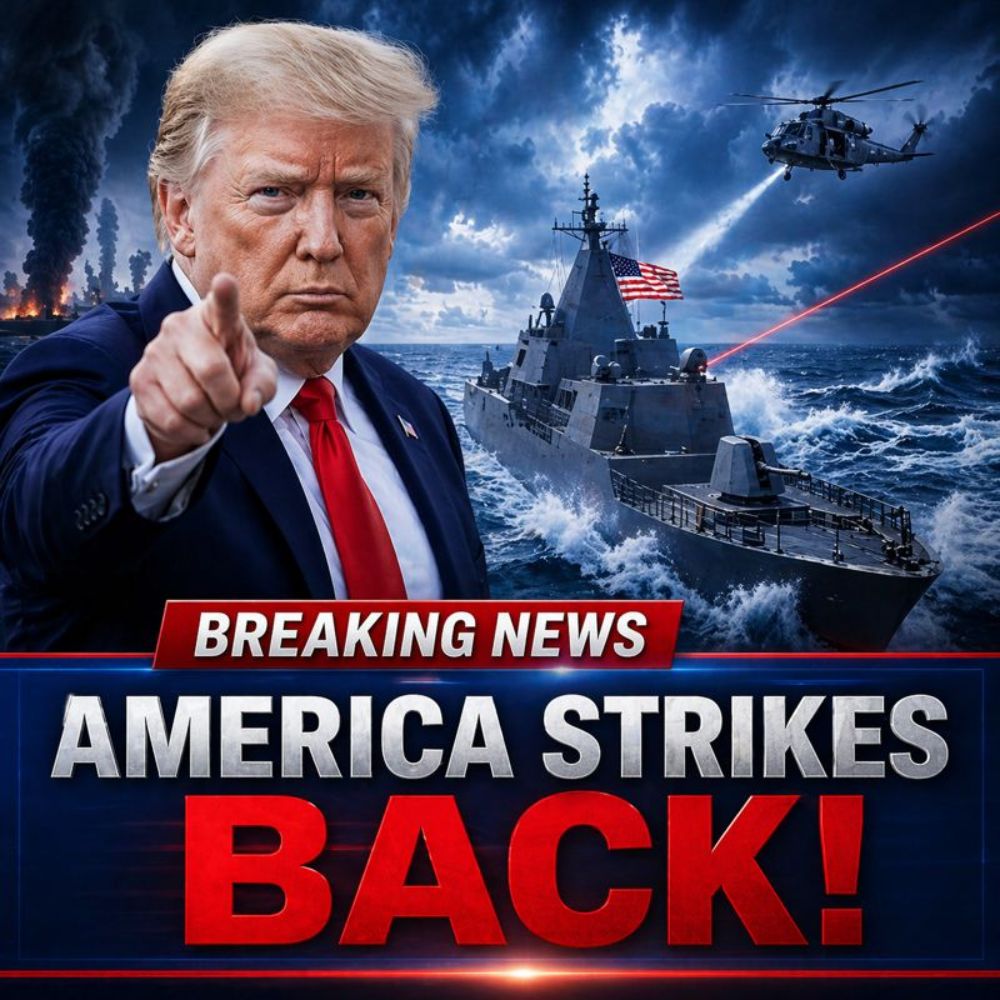
WASHINGTON D.C. / PERSIAN GULF — The sound of a single U.S. destroyer firing upon an Iranian-flagged cargo ship late yesterday has echoed far beyond the Gulf of Oman. It is the sound of a “blockade as advertised,” according to military analysts, but it is also the opening bell for a terrifying new phase of the 2026 conflict: Mutual Assured Economic Destruction.
Tonight, the world stands at a precipice. The Strait of Hormuz, a waterway that carries 20% of the world’s oil supply, remains a “choke point” in every sense of the word. While President Donald Trump insists the naval blockade of Iranian ports is “going swimmingly,” the reality on the ground—and on the water—is a dizzying array of tit-for-tat escalations, broken ceasefires, and a global economic “reckoning” that is sparing no one.
I. The Engagement: A Destroyer in Range
General Wesley Clark, joining us this hour, confirms that the Iranian-flagged ship fired upon by U.S. forces was sanctioned and had “disobeyed orders to stop” while en route to Bandar Abbas. This was the “proof positive” the administration sought—a demonstration that the President meant what he said.
However, the tactical victory comes with a harrowing footnote. The U.S. destroyer that engaged the ship is currently operating within range of Iranian shore-to-ship missiles.
“Iran has several varieties of anti-ship missiles—cruise, sea-skimming, and ballistic,” General Clark noted. “For a destroyer like this, they wouldn’t fire just one; they would try to bracket it. They are likely receiving real-time targeting information from Chinese satellites.”
As of this hour, Tehran has not launched a kinetic response, leading some to hope that the upcoming diplomatic talks may still have a pulse. But the silence from the Iranian coastal batteries is less a sign of peace than it is a sign of a “tough bargainer” waiting for the clock to tick against the United States.
II. Economic Armageddon: Agriculture, Fuel, and Chips
We have entered a stage where both sides are attempting to “starve” the other into submission, but the fallout is global. The blockade isn’t just cutting off Iranian revenue; it is strangling the allies of the West.
The Triple Cut-Off:
Fuel: Oil prices are surging as tankers remain trapped in prescribed transit lanes.
Agriculture: The disruption of regional supply chains is causing an immediate spike in global food costs.
Technology: A little-discussed consequence of the blockade is the Helium Cut-Off, which is already threatening global semiconductor and chipmaking operations.
“Which side is going to blink first?” Clark asked. “The clock is ticking against the U.S. because of the price of gasoline and the upcoming midterms. President Trump’s apparent impatience to end this is a card the Iranians are playing with expert precision.”
III. The Ceasefire Mirage: April 17 to April 27
The 10-day ceasefire that began on April 17 is currently gasping for air. Sources indicate that the Iranians “forced” President Trump to pressure Israeli Prime Minister Benjamin Netanyahu into the pause—a massive concession that Netanyahu, facing his own re-election battle, did not want.
The ceasefire is set to expire this coming Monday, April 27. But while the “opening of the straits” was touted by the administration as a breakthrough, the fine print reveals a different story. Iran’s Revolutionary Guard Corps (IRGC) Navy has made it clear that any “opening” comes with conditions:
Commercial vessels only.
Prescribed transit lanes.
Prior approval from the IRGC for every tanker.
Under these circumstances, the U.S. blockade remains in full force. We are no longer debating a return to peace; we are debating whose “threshold for pain” is lower—the Trump administration or the IRGC.
IV. The Leverage Paradox: Winners and Losers
If the war ended tomorrow, who would actually win? The answer is politically inconvenient for Washington.
Despite weeks of bombing raids on Kharg Island and military targets, the Iranian regime has survived. They still possess highly-enriched uranium. Their ballistic missile silos are being “dug out” in anticipation of another round. Most importantly, they have deployed Geography in a way that will haunt the U.S. for decades. They have proven they can close the Strait of Hormuz anytime they want—a power they didn’t fully demonstrate until now.
The Negotiation Table (2026)
“The only thing that’s going to end this war is an Iranian nuclear agreement that looks suspiciously like the one Obama negotiated in 2015,” one analyst noted. “The very one Trump walked out of in 2018. We are traveling thousands of miles and spending billions of dollars to potentially end up exactly where we started.”
V. The Allied Exodus: “No One on America’s Side”
Perhaps the most damaging fallout of the conflict is the isolation of the United States. While traditional allies like Canada initially backed the war—with Prime Minister Mark Carney supporting the “illegal” rationale of targeting nuclear weapons—that support has largely evaporated.
“No one is on America’s side right now. No one,” said a frustrated observer in Washington. “People are at best neutral. In some cases, the United States and Israel are being framed as the perpetrators of an illegal war that has dragged the rest of the world into an economic mess.”
From the gas pump in Michigan to the grocery store in Paris, the “economic effects” of this war are hitting regular citizens every minute. The “faking orange loser’s fault” rhetoric is beginning to take hold even among those who once gave the administration the benefit of the doubt.
Conclusion: The Longest Monday
As we head toward the expiration of the ceasefire on Monday, the “Straitjacket” of global economics and military reality has tightened. Donald Trump is not a man interested in peace; he is a man interested in the optics of victory. But you cannot “obliterate” the laws of supply and demand, and you cannot “deport” the geographical reality of the Persian Gulf.
The Iranians are tough bargainers. They believe they can out-talk and out-wait the American delegation. They are watching the U.S. election calendar as closely as they watch their radar screens.
The ships are in range. The prices are up. And as the world waits to see who blinks, the only certainty is that the bill for this “unnecessary” war is being paid by every family in America.