By the early 1890s, the farm of Paul Halliday in Sullivan County, New York, had become a place no one wanted to visit. The stench of rot seeped through the farmhouse, and flies swarmed the property. Neighbors who had once tolerated the chaos emanating from the farm now kept their distance. When investigators finally lifted the floorboards, they found the remains of two women, Margaret McQuillan and her daughter Sarah.
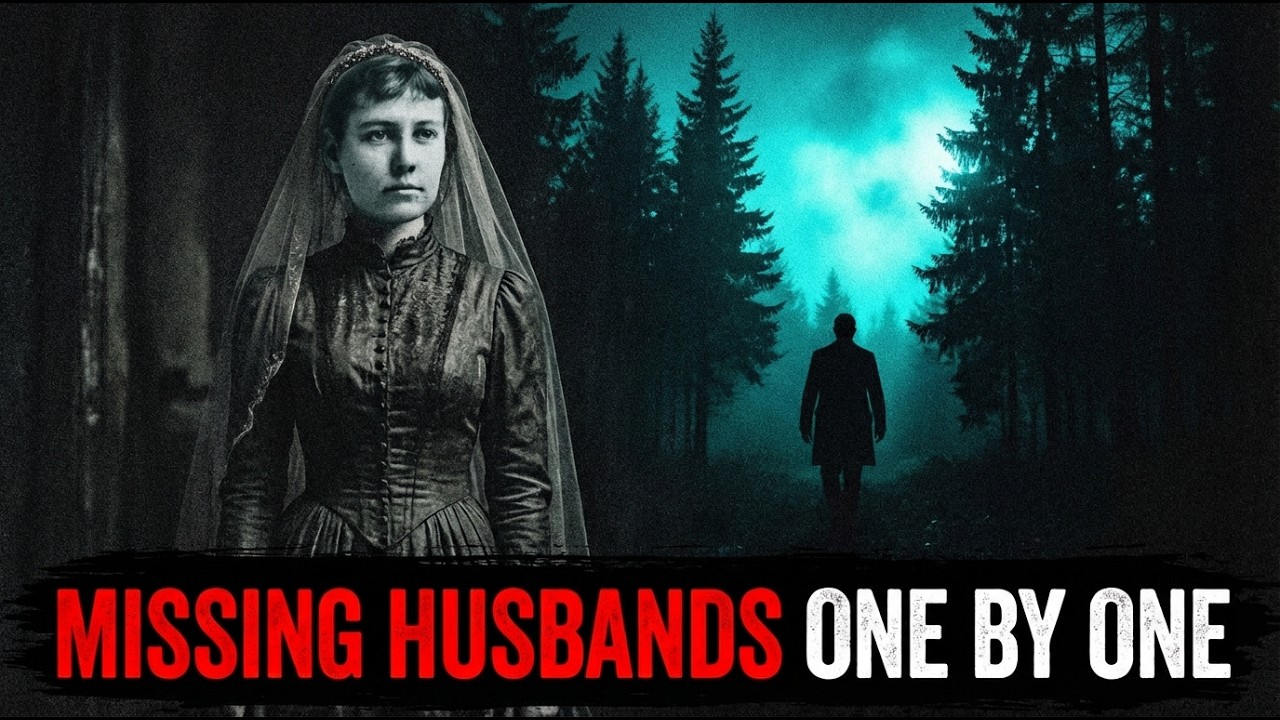
Nearby, they located the body of Paul Halliday himself, the farmer who had married Lizzie and who had disappeared months earlier. For over two decades, a pattern of death and disappearance had followed Lizzie Halliday across rural New York. Only now did the authorities begin to grasp the full scope of what had been in front of them the entire time. The woman at the center of this was born Eliza Margaret McNally in County Antrim, Ireland.
She arrived in America sometime in the 1860s, young and alone, entering a country that had a specific place for Irish immigrant women: domestic work, invisibility, and silence. For years, she moved through the lower rungs of New York’s economy, scrubbing floors and washing linens, leaving little trace of her existence. But Lizzie diverged from the typical immigrant story in one crucial way. She married repeatedly, and the men she married had a tendency to stop existing.
The exact number of her marriages remains contested. Some historians count four, others as many as six. The records contradict each other, partly because rural marriage documentation was inconsistent and partly because Lizzie moved frequently, changing names, towns, and stories. What is not disputed is the pattern.
Husband after husband either died, disappeared, or fled. At least two of her early husbands died under circumstances neighbors later described as sudden and unexpected. No autopsies were performed. No inquests were opened.
In rural New York in the 1870s and 1880s, a man dying of a sudden fever or stomach ailment was tragic, but it was not unusual enough to invite investigation. Fires also followed Lizzie from town to town. Property would burn at suspiciously convenient moments, sometimes shortly after an insurance policy was taken out, sometimes right before she needed a reason to relocate. She was linked to a string of thefts, small enough to avoid serious prosecution but large enough to fund her next chapter.
Yet none of this activity connected her to anything criminal in the eyes of the law. The system was not built to notice a transient woman crossing county lines. There were no centralized records and no coordinated law enforcement. To vanish and reappear as someone slightly different, all one needed was a new town and a short memory.
Lizzie had both. Some of her husbands were not victims of violence at all. They simply left, or she abandoned them, and the marriages dissolved without legal formality because divorce was expensive and complicated. How many of these men were murdered and how many were merely casualties of bad marriages in an era when walking away was easier than filing paperwork cannot be established with certainty.
The sensational press of the 1890s would later collapse every missing husband into a murder victim for the sake of a better headline, but the historical record is murkier than the newspapers wanted it to be. By the late 1880s, Lizzie was known across Sullivan County as someone to stay away from. Neighbors locked their doors. Landlords refused her tenancy.
The local sheriff had her name memorized. Everyone could see the danger, but no one had the legal tools to do anything about it. Then Paul Halliday, a quiet, aging farmer of modest means, married her. It would have been nearly impossible for him to know her history.
Lizzie’s past was scattered across multiple jurisdictions, none of which communicated with each other. There was no background check, no database, no system that could have flagged a woman with a trail of dead and missing husbands stretching back two decades. The marriage unraveled almost immediately. Lizzie’s behavior became erratic.
She picked fights with neighbors, vanished for days without explanation, and threatened Paul openly. Then came the fires again. Structures on the Halliday property caught fire with a frequency that defied coincidence. Barns and outbuildings burned, and the pattern she had carried from previous marriages followed her like a signature.
Paul reportedly tried to have her committed at least once. She was briefly institutionalized, evaluated, and released. Whatever the doctor saw was not enough to keep her confined. She returned to the farm, and Paul remained trapped in a marriage he could not safely exit.
Then Paul vanished. He stopped appearing at the general store. He stopped tending his fields. For weeks, no one could confirm whether he was alive, dead, or simply gone.
Neighbors began asking questions, but quietly, because asking questions about Lizzie Halliday carried its own risks. Around the same time, Margaret McQuillan and her daughter Sarah disappeared. They were not wealthy or prominent people, the kind of individuals whose absence takes days to register because nobody important is waiting for them. But eventually, someone noticed, and the search led to the Halliday farm.
Investigators discovered the remains of Margaret and Sarah McQuillan concealed beneath the farmhouse. They were not natural deaths. The details, reported extensively in the press, confirmed deliberate violence against two women who had the misfortune of being in Lizzie’s orbit at the wrong moment. The remains of Paul Halliday were found not far from where the McQuillan women had been concealed.
His disappearance was no longer a mystery. Lizzie was arrested, and for the first time, the full scope of her history spilled into public view. Journalists descended on Sullivan County. Newspapers across the country competed to find the most dramatic language for what Lizzie represented, eventually settling on a phrase that would follow her for the rest of her life: the worst woman in America.
The trial began in 1894. The courtroom was packed, with journalists from New York City, Philadelphia, and Chicago fighting for seats. The prosecution presented its case methodically: the McQuillan women, Paul Halliday, the physical evidence recovered from the farm, and the timeline of Lizzie’s movements. They also presented her earlier marriages, the fires, the thefts, and the decades of chaos as context, a portrait of a woman whose adult life had escalated toward violence.
The defense argued that Lizzie was genuinely, profoundly insane. She had been institutionalized before, evaluated by doctors who noted severe disturbance, and released anyway because the infrastructure for long-term psychiatric confinement barely existed. The jury was not persuaded by the sympathy angle. They convicted Lizzie and sentenced her to death.
But the sentence was appealed. Doctors re-examined her and concluded, this time with more authority, that she was legally insane. The death sentence was commuted, and Lizzie was transferred to the Matteawan State Hospital for the Criminally Insane in Beacon, New York. The public was furious.
Newspapers that had spent months calling her the worst woman in America turned their outrage toward the legal system that had spared her life. The courts maintained that the law required it. For about twelve years, Lizzie faded from public attention. Inside Matteawan, she aged and became part of the institution’s routine.
Then, in 1906, she killed again. Her victim was a nurse named Nellie Wickes, attacked with a pair of scissors inside the facility. Wickes had regular contact with Lizzie, and the institution had placed her in proximity to a convicted killer without the safeguards necessary to protect her. She died from her injuries.
The questions that followed were devastating. How does a woman already convicted of multiple homicides, already declared criminally insane, already confined to a maximum security psychiatric facility, manage to take another life? The answer pointed to an underfunded, overcrowded institution where staff were spread thin and the systems meant to prevent violence had eroded. There was no second trial.
Lizzie was already confined for life. She remained at Matteawan under tighter restrictions. Lizzie Halliday died at Matteawan in 1918. No family claimed the body.
No funeral was held. No headstone was placed. The confirmed number of her victims is four: Margaret McQuillan, Sarah McQuillan, Paul Halliday, and Nellie Wickes. These deaths are supported by physical evidence, legal proceedings, and documented investigation.
The press of the 1890s attributed as many as a dozen victims to her, folding every missing husband and unexplained death into a narrative that grew more sensational with each edition. Some of those claims may have been true. Others were almost certainly invented by journalists who understood that a serial killer with twelve victims sells more papers than one with four. What is known is that at least two of her former husbands died under circumstances that were never investigated.
Autopsies were never performed. Evidence was never collected. The questions were never asked. It was not that Lizzie was too clever to catch.
It was that nobody tried. The systems meant to protect the people around her failed repeatedly for over twenty years. Lizzie Halliday was not invisible because she was cunning. She was invisible because the country she lived in was not built to see people like her.
By the time it finally looked, there were bodies under the floorboards.






