In January 897, the corpse of Pope Formosus, dead for nine months, was carried into a courtroom in the Lateran Palace in Rome. Someone had gone down into the crypt of St. Peter’s, opened the tomb, lifted out what remained of the former pope, dressed it in the vestments of his office, and propped it on a throne. A deacon stood beside the chair to answer questions on the dead man’s behalf.
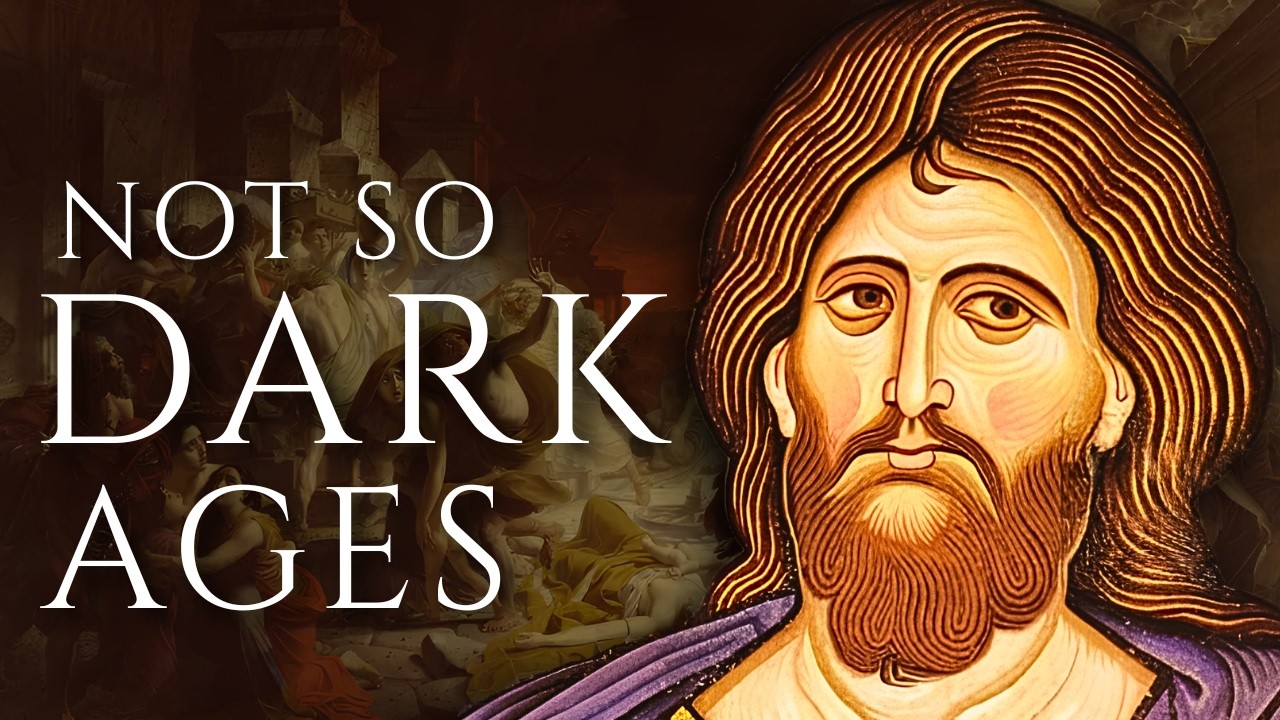
The judge was the current pope, Stephen VI, who shouted the charges one after another: that Formosus had been bishop of another see before he was bishop of Rome, that he had purged himself, that he had been ambitious. The bishops of the Roman church sat on their benches and watched a dead man cross-examined by a living one who was, by most accounts, coming apart. The corpse was found guilty. The dead man’s vestments were stripped off.
The three fingers of his right hand, the ones he had used for blessing, were cut off. He was buried in a pauper’s grave, dug up, and thrown into the Tiber. A monk or a fisherman pulled the body out of the river and hid it. An earthquake damaged the Lateran while the dispute was still hot, and people took it as a comment.
Within months, Stephen was seized by a mob, thrown into prison, and strangled in his cell. Seven hundred years later, a cardinal in the same city, Cesare Baronio, working through the records of the tenth-century popes for a history of the church, reached that trial and the decades that followed. He wrote that he was entering an obscure age, a saeculum obscurum, a dark age. He meant the popes, and he meant about a hundred years.
The phrase got away from him. Within two centuries, it covered everything from the fall of Rome to the Renaissance. A thousand years of Europe filed under darkness, and it is still the first thing most people think when they hear the word medieval. The stretch of time Baronio was talking about has plague pits and skull cups in it.
It also has Hagia Sophia and the shape of the lowercase letters in every printed book. Both are true at once. The fall starts with a wedding night. Attila the Hun died in 453 in his bed on the night he married a young woman named Ildico.
The account comes through Jordanes, working from a lost history by Priscus, who had actually sat at Attila’s table on an embassy a few years earlier. Attila drank heavily at the wedding feast and went to bed late. In the morning, his attendants found the bride sitting under her veil, crying, and Attila lying on his back, dead, with no wound on him. He had had a nosebleed, one of his frequent ones, and with him flat on his back and insensible with wine, it had run down his throat instead of out of his nose.
He drowned in it. The Roman world he had been terrorizing did not get safer with him gone. Two years earlier, the general Aetius had stopped Attila’s army at the Catalaunian Plains. Aetius was the last really capable soldier the Western Empire had.
In 454, the emperor Valentinian III called him into an audience, listened to him for a while, and then drew a sword and cut him down personally. One of the courtiers said afterwards that the emperor had cut off his right hand with his left. Six months later, Valentinian was killed by two of Aetius’s old bodyguards. Within three months, the Vandal king Gaiseric had a fleet in the Tiber.
Pope Leo went out to meet him and got an agreement that the Vandals would refrain from fire and from killing. In return, they took everything else for fourteen days methodically. They stripped the gilded bronze tiles off the roof of the Temple of Jupiter. They took the treasures Titus had carried back from the temple in Jerusalem nearly four hundred years before.
They took the empress and her two daughters. Twenty-one years after that, a Germanic officer named Odoacer decided there was no point pretending anymore. He sent the imperial regalia east to Constantinople and retired the last emperor, a teenage boy called Romulus Augustulus, to a villa in Campania on a pension. That was 476.
The city that had been sacked twice in forty-five years kept shrinking. Odoacer himself got seventeen years. The Eastern Emperor sent the Ostrogoths in under Theodoric to remove him. After three years of war, the two of them agreed to rule Italy jointly.
Ten days after the agreement, Theodoric gave a banquet to celebrate it. Odoacer came. Two of Theodoric’s men grabbed his arms, and Theodoric stepped forward and cut him down himself, one stroke from the collarbone to the hip. Odoacer’s brother was shot dead trying to get into a church.
His wife was thrown into prison and starved. His son was killed trying to come home. That was the man who then ruled Italy for thirty years. And ruled it rather well.
He kept the Senate and repaired the aqueducts and hired Romans to run the paperwork of his kingdom. The most important of them was Boethius, born into one of the grandest families in Rome around 480. Consul at thirty, master of offices at forty, both of his teenage sons made consuls in the same year. In his spare time, he was translating Aristotle into Latin so that the West would still have him if the Greek was lost.
Around 523, a fellow senator was accused of treasonable letters to Constantinople. Boethius stood up and defended him, and the accusation moved on to Boethius. He was arrested and taken north to Pavia, held in confinement for the better part of a year. While he waited, he wrote a book.
The Consolation of Philosophy is a dialogue between a prisoner and the figure of Philosophy herself, who appears in his cell and talks him through why fortune’s wheel turns and what a man can keep when it does. It became for the next thousand years one of the most copied and translated books in Europe. Then they killed him. A cord was looped around his forehead and twisted with a stick until his eyes were forced out of their sockets.
Then they beat him to death with clubs. Not long after, a large fish was served at the king’s dinner, and Theodoric looked at the head on the plate and saw the face of Symmachus, Boethius’s father-in-law, teeth bared, staring up at him. He went to bed shaking and died a few days later in 526. In Constantinople, the emperor in those years was Justinian.
He came to the throne in 527 with a lawyer’s mind and a wife, Theodora, who had started life in the circus. In the space of a decade, he nearly lost his throne and then built the greatest church in Christendom over the ashes of the riot that almost took it. In January 532, the two chariot racing factions of the capital joined forces over a botched execution and rioted for a week. They burned half the city, including the old cathedral, and proclaimed a rival emperor.
Justinian was packing to flee. Theodora stopped him, telling him that purple made a fine burial shroud. Instead of running, he sent his generals into the Hippodrome with the troops. The stands were packed with rioters, and the exits were sealed.
By the time the soldiers came out, the estimate that went around the city was 30,000 dead. Justinian’s throne was secure. He built over the ashes. Where the burned cathedral had stood, he put Hagia Sophia, and he put it up in under six years.
The dome is 31 metres across and sits on a ring of forty windows, so from underneath it looks like it is floating. The building has been standing for nearly 1,500 years. In the same years, his lawyers were boiling down a thousand years of Roman legal opinion into the Digest and the Code, the foundation of the legal systems of most of continental Europe and South America today. He had one year of glory after the church went up.
Then the sun went dim. Starting in 536, for about a year and a half, the sun came up wrong, and people wrote it down all over the Mediterranean independently. A senator in Ravenna complained that the sun had gone bluish, that a man standing at noon threw no proper shadow. A churchman in Syria wrote that the sun shone for about four hours a day.
Procopius put it most plainly: the sun gave out its light without brightness, like the moon, and men were afraid. A volcano, most likely in Iceland, had pushed a column of ash high enough into the atmosphere that it spread across the planet and hung there. Four years later, another volcano in the tropics did it again. Tree rings from Ireland to Siberia show growth practically stopping for ten years, the coldest decade in 2,000 years.
And then the bacterium arrived. The plague of Justinian reached Constantinople in the spring of 542. Procopius watched it come into the city and wrote it down in more detail than any doctor of the time. It started among the poor down by the harbor.
A person would wake with a low fever. A day or two later, swellings would come up in the groin or the armpits. Some people fell into a coma so deep they couldn’t be woken to eat. Others went into a raving delirium and threw themselves into the sea.
The daily toll reached 5,000, then 10,000. The diggers couldn’t keep up, so they went to the towers of the fortification wall, tore the roofs off, and started throwing bodies in. Justinian caught it himself, developed a bubo in the groin, and for some weeks the government of the Roman Empire was Theodora and a handful of officials pretending things were fine. He recovered.
The plague moved west and did its work in Italy and Gaul, and it kept coming back for two centuries. Italy in those years was also a battlefield. Justinian had decided to take the old western provinces back, and his general Belisarius landed in Italy in 535 to take it from the Goths. The war went on for nearly twenty years and ruined the country more thoroughly than the barbarians ever had.
Rome was besieged, taken, lost, retaken. In 546, the Gothic king Totila got into the city after the population had eaten the dogs and the mice and the nettles growing out of the walls. He pulled down a third of the walls, marched the surviving inhabitants out into the countryside, and left. For forty days or more, no human being lived in the city of Rome.
The aqueducts had been cut during the sieges, and the water never came back to most of them. When the fighting ended in 554, the Goths were finished as a people, and the peninsula was a wreck. So when the next lot came over the Alps fourteen years later, there was hardly anyone left to stop them. The Lombards came into Italy in 568 under a king named Alboin.
Before Italy, the Lombards had been living up on the Danube and fighting a long war with a neighboring people called the Gepids. It ended in a battle in which Alboin killed the Gepid king, Cunimund, in person. He took Cunimund’s daughter, Rosamund, as his wife, and he had Cunimund’s skull cut down and mounted as a drinking cup. Paul the Deacon, writing 200 years later, says flatly that he had seen the cup himself.
Four years into the conquest of Italy, at a feast in Verona in 572, Alboin got drunk, called for the cup, had it filled, and sent it down the table to his wife with the message that she should drink cheerfully with her father. She did as she was told. Then she began arranging to have her husband killed. The man she recruited, a warrior called Peredeo, came into Alboin’s bedchamber while he slept.
Rosamund had taken the king’s sword and lashed it tight to the bed frame so it couldn’t be drawn. Alboin woke, reached for the sword, couldn’t free it, fought with a footstool for as long as a man can fight with a footstool. Then they cut him down. The Franks across the Alps were tearing each other apart with knives.
Nearly everything we know about the early Frankish kings comes from Bishop Gregory of Tours, who wrote a huge and gossipy history of the Franks in the 580s and 590s. He was in the middle of it. He knew these people. The feud that consumed the century started with a marriage.
Chilperic, king in the north, had a mistress named Fredegund and a queen named Galswintha, a Visigothic princess from Spain. Galswintha complained about the mistress and asked to go home. Not long after, she was found strangled in her bed, and Chilperic married Fredegund within days. Galswintha’s sister was Brunhilda, queen of the neighboring Frankish kingdom of Austrasia.
Brunhilda wanted blood for her sister and spent the next forty years getting it. She ruled Austrasia through her son and then her grandsons. In 613, the nobles turned on her and handed her to Fredegund’s son, Clothar II, who had every reason to hate her. The chronicler says Clothar had her tortured for three days first.
Then she was put on a camel and paraded through the ranks of the army. Then they tied her by her hair, one arm, and one leg to the tail of a horse that had never been broken and let it go. The horse dragged her across the ground until she came apart. What the hooves and the ground had left was gathered up and burned.
A generation after Brunhilda, the Merovingian kings started to fade. The family that held the job of mayor of the palace produced Charles Martel, who stopped an Arab army near Tours in 732, and his son Pepin, who in 751 sent to the Pope to ask whether it was right that the man with the power should have no crown. He got the answer he wanted. The last Merovingian was taken out, had his long hair cut off, and was sent to a monastery.
Pepin was anointed with holy oil. And his son was Charlemagne. Charlemagne is the nearest thing this whole period has to a hero. He also ordered the single worst thing in the written record of these centuries.
The war was with the Saxons, the pagan peoples across the Rhine, and it ran for over thirty years. Every time the Frankish army left, they rose again. In 782, a Saxon revolt under a chief named Widukind caught a Frankish force in the Süntel Hills and wiped it out. Charlemagne came north in a fury.
Widukind escaped, but the Saxon nobles handed over the men they said had been responsible. What the royal Frankish annals record is that at Verden on the river Aller, the king had 4,500 Saxons beheaded on the same day. The entry is one sentence from the official court chronicle kept by his own clerks. The same year he issued a law code for Saxony that made it a capital crime to refuse baptism.
The war also paid. In 796, Charlemagne’s son broke into the ring fortress of the Avars, and the treasure that came out of it went west in fifteen wagons, each drawn by four oxen. Some of that gold went to Baghdad to the Caliph Harun al-Rashid, who sent back, among other things, a white elephant called Abul Abbas. It walked from the Mediterranean coast over the Alps to Aachen, arrived in 802, lived at the Frankish court for eight years, and died on campaign.
The other half of this is Alcuin of York, an Englishman who Charlemagne hired to build a school at the palace. Out of that school came something that is still in front of you if you are watching this on a screen. Alcuin and the scribes at Tours and Corbie and Fulda settled on a new hand, small and clear with spaces between the words, with the tall and short letters we would now call upper and lowercase: Carolingian minuscule. Six hundred years later, Italian humanists digging up ninth-century manuscripts assumed that beautiful clear writing must be the ancient Roman hand itself and copied it.
The first printers copied the humanists. When you type a lowercase letter, you are using Charlemagne’s handwriting reform. The other thing the scribes did was save the classics. From all the centuries before 800, fewer than 2,000 manuscripts survive.
From the ninth century alone, more than 7,000. Nearly everything you have ever heard of from Roman literature comes to you through that copying. Charlemagne himself could not write. His biographer says he kept wax tablets under his pillow and practiced letters in bed when he couldn’t sleep, but he’d started too late.
He was about six feet tall, had a high, thin voice that surprised people, and refused to give up roast meat when his doctors told him to. He died in 814 of pleurisy at Aachen and was buried under his own church. In the year 1000, his tomb was opened by a young emperor, Otto III, who wanted to see him. The story that came back was that Charlemagne was sitting upright on a marble throne with a crown on his head, and that the flesh had mostly gone from the face, except that the nose had fallen away.
Otto had a gold nose made to replace it. The school at Aachen was drawing on a tradition that had been kept going for the previous two centuries on the far edge of Europe in Ireland and the north of England. The Lindisfarne Gospels were painted around 700 on the tidal island of Lindisfarne off Northumbria by one monk, Eadfrith, who ground his own pigments, some of them possibly from lapis lazuli that had come from Afghanistan. The Book of Kells, made around 800 probably on Iona, is the same idea pushed to obsession.
The great scholar of the tradition was Bede, who spent his entire life in the twin monastery of Wearmouth and Jarrow and who wrote in 731 a history of the English church. He also decided to date everything from the incarnation of Christ, and it is mostly through Bede’s book being copied everywhere that we count years the way we do. That was the world the Vikings sailed into. On the 8th of June, 793, ships came up out of the sea to the island of Lindisfarne, where Eadfrith had painted his gospels.
The heathen, as the chronicle puts it, miserably destroyed God’s church there through robbery and slaughter. Alcuin, at Charlemagne’s court in Aachen when the news reached him, wrote back in a state of shock. Some of the monks were killed on the spot, cut down at the altar. Some were dragged down to the shore and drowned.
Some were taken away in chains to be sold. He also wanted to know what the Northumbrians had done to deserve it. Among the sins he listed was that the men of Northumbria had taken to cutting their hair and trimming their beards in the pagan fashion to look like the very people who were now murdering them. For seventy years, it was raids, summer work, monasteries and coastal towns.
Then in 865, the Great Heathen Army landed in East Anglia, took horses, and didn’t go home. It wintered. It moved north to York in 866. When the two rival kings of Northumbria stopped fighting each other long enough to attack the city together in March 867, the army let them in and killed them both inside the walls.
For King Edmund of East Anglia, the story of how he died was written down a century later. The Danes captured him and demanded that he share his kingdom and renounce Christ. He wouldn’t. They tied him to a tree and beat him with clubs.
Then the archers stood off and shot arrows into him slowly until, in Abbo’s phrase, he bristled with them like a hedgehog. Then they took his head off and threw it into the brambles. The searchers who came afterwards found the body but not the head. As they went through the wood, they heard a voice calling, “Here, here, here,” and found the head lying between the front paws of a gray wolf that was guarding it.
The shrine at Bury St. Edmunds became one of the richest in England. We have found some of the army. They wintered in 873 at Repton in Derbyshire and cut a defensive ditch straight through the local church.
In the 1980s, archaeologists opened a mound and found a charnel deposit of nearly 300 people, mostly men between 18 and 45. Radiocarbon work published a few years ago put the whole lot in the right decade. Alfred is the reason the English still have a country. The army came for Wessex in 878 in the middle of winter and caught him at Chippenham after Twelfth Night.
He ran with a few men into the marshes of Somerset and hid on an island at Athelney. He was also, by his biographer’s account, ill for most of his adult life with a painful internal complaint that first hit him at his own wedding feast and never properly went away. From there he pulled together the men of the western shires, met the Danes at Edington that May and beat them, and their King Guthrum agreed to be baptized with Alfred as godfather. After that, Alfred built fortified towns in a network across Wessex, put together the first English navy, had the year-by-year chronicle started so that the kingdom would have a record of itself in its own language, and turned to books.
He complained that when he came to the throne, there was hardly a priest south of the Humber who could translate a letter from Latin. One of the books he chose to translate into English was The Consolation of Philosophy, the book Boethius wrote in a cell in Pavia three and a half centuries earlier, waiting for the cord and the clubs. Now the Vikings from the inside. In 922, an Arab diplomat named Ahmad ibn Fadlan was sent on a mission to the king of the Bulgars on the Volga.
While he was there, a party of Rus, the Scandinavian traders who ran the river routes, arrived to do business, and one of their chiefs died. Ibn Fadlan watched what they did about it and wrote it down. It is the only eyewitness account of a Viking ship funeral in existence. He says they were the tallest men he had ever seen, built like palm trees, blonde and ruddy, every one of them carrying an axe and a sword and a knife at all times.
He calls them the filthiest of God’s creatures. The dead man was put in a temporary grave for ten days while they sewed his funeral clothes. Then they asked his slaves which of them would die with him, and a girl said she would. From that moment, she was not allowed to change her mind.
On the day, a ship was hauled up onto the bank. The old woman they called the Angel of Death was in charge of everything from here on. The girl went from tent to tent among the men of the party, and each of them had sex with her and said, “Tell your master I did this for love of him. ” Then they carried her to a door frame set up on the shore and lifted her up three times.
The first time she said, “I see my father and mother. ” The second time she said, “I see all my dead kin sitting together. ” The third time she said, “I see my master sitting in paradise, and paradise is green and beautiful, and he is calling me. ” They walked her up to the ship and into the tent, and six men followed her in.
The men outside began beating their shields with sticks, and Ibn Fadlan says the reason for the noise was so that the other slave girls would not hear her screaming. The old woman put a cord around her neck and drove a broad dagger in between the girl’s ribs over and over while the men pulled on the cord until she stopped moving. Then the ship was set alight. A Rus standing beside Ibn Fadlan said something to the interpreter and laughed.
The interpreter told him, “You Arabs are fools. You take the man you love best and put him in the ground for the worms to eat, while we burn him in a moment and he goes to paradise that very hour. ”
The trading was mostly in people. Our word slave comes from Slav.
The Slavic peoples of Eastern Europe were being taken west and south in such numbers that the ethnic name became the word for the condition. In the year 1086, when the Norman conquerors surveyed England, they found that one person in ten at the least was owned. Most people in these centuries didn’t die like Brunhilda or the girl on the Volga. They died of being alive in the seventh century, and the skeletons are the record.
Dig up an early medieval cemetery and something like a third of the graves are children. Women died in childbirth at a rate that made every pregnancy a gamble. Anyone who survived to adulthood carried the marks: lines across the teeth where growth stopped in a hungry year, abscessed teeth everywhere, a dental abscess untreated killing you at 30. Healed weapon cuts in skulls.
The law was written to leave marks too. Anglo-Saxon law codes priced everyone. Alfred’s law gives a separate price for a wound that leaves the bone showing. Æthelstan’s laws hanged any thief over twelve years old caught with more than eightpence.
Cnut, the Danish king who ended up ruling England, wrote it into law that a second offender should lose his hands or his feet or both, so that, in the words of the text, his soul might be saved. Between the plagues and the poisonings came the ordinary famines. In the wet years, rye stored damp grew a fungus called ergot, which constricts the blood vessels. In 857, a chronicle from the Rhineland describes a great pestilence of swollen blisters that consumed people with a loathsome rot so that their limbs came loose and dropped off before they died.
Ergotism. First the burning, a sensation people described as fire under the skin, so it came to be called holy fire or St. Anthony’s fire. Then the fingers and toes go cold and black and dry out and mummify, and eventually a foot or a hand can simply detach at the joint without bleeding, with the person still conscious and watching.
The same centuries were also getting better at feeding people. The heavy wheeled plow spread through northern Europe and let farmers open the deep wet clay soils the Romans had never been able to cultivate. The horse collar came in and let a horse pull from its shoulders rather than its throat. Water mills went from a Roman rarity to something every village had.
When the Normans surveyed England in 1086, they counted nearly 6,000 of them. Spain had its own version of all this. After the Visigoths settled there, they produced in the 600s a bishop of Seville named Isidore who set out to write down everything and did. His Etymologies is an encyclopedia of the whole of ancient knowledge, and it was copied in nearly every library in Europe for the next 800 years.
That kingdom with its encyclopedia and its law fell in one afternoon in 711. An army of Arabs and Berbers crossed from Morocco under a commander named Tariq, and the Visigothic king Roderic was beaten and vanished. Within four years, the whole peninsula bar a strip of mountains in the north was ruled from Damascus. Rome by then had reached the decades Baronio was writing about.
Formosus had been pope from 891 to 896, a reasonably able and reasonably honest man in a Rome where the papacy had become a prize fought over by noble families. After his trial and all the rest, the next pope but two had Formosus reburied in St. Peter’s with honor. Then in 904, a pope from the original anti-Formosus faction, Sergius III, came in and reinstated the whole verdict.
Sergius, according to Liutprand of Cremona, took as his mistress a fifteen-year-old Roman noblewoman named Marozia, and the son Marozia had by the Pope became in due course Pope John XI. Marozia married three times, and her son by her first marriage rose against her in 932 and put her in prison. A document survives from 986 in which a bishop is sent to absolve an old woman in a cell called Marozia before she is put to death. If that’s her, she spent half a century in the dark.
Marozia’s son Alberic ran Rome for twenty years, and on his deathbed made the nobles swear to elect his teenage son pope. They did, and the son became John XII at about eighteen. Liutprand’s account of him is the most spectacular thing in the whole period. He says John turned the Lateran into a brothel, that he ordained a deacon in a stable, that he blinded his confessor and castrated a cardinal who died of it.
When the German king Otto came to Rome and had him deposed in 963, John waited until Otto had left, came back with an army, and went through the men who’d voted against him. A cardinal deacon had his right hand cut off. A notary lost his tongue and his nose. In 964, aged about 27, he died while in bed with a married woman.
Liutprand hated the Roman aristocracy and wrote the whole thing to justify the deposition. Even so, the papacy of those decades was inherited and fought over like a farm. The man who got there in 999 and did something with it came from about as far from Rome as you could get. Gerbert of Aurillac was a peasant son from the mountains of central France, given to a monastery as a boy.
Around 967, a passing Catalan count noticed how quick he was and took him south over the Pyrenees to study. The monasteries of Catalonia sat on the border with the Muslim caliphate of Córdoba, and the monks there had been quietly acquiring Arabic books on mathematics and astronomy for decades. Gerbert spent three years learning what the Arabs knew. He built an abacus and used it with the nine Arabic numerals instead of Roman ones, the first time those figures had been used in the Latin West for working things out.
He built an armillary sphere out of wood to show his students the movement of the heavens. He tutored Otto III, and in 999 Otto made him pope. He took the name Sylvester after the pope who’d baptized Constantine. To the Roman clergy, he was a foreign magician who did sums with heathen symbols.
Within a generation, the story went round that he’d learned it all from the devil. He’d learned it from a civilization that was at its height while Rome was digging up popes. In the years Marozia was in her cell, Córdoba under the Caliph al-Hakam II was the largest city in Europe, with a library that later writers said held 400,000 volumes. The streets were paved, some of them lit at night, and no city in the Latin West could say that.
Otto died in 1002 of a fever, probably malaria, at 21. Gerbert died in Rome in 1003, four years into his papacy, and was buried in the Lateran. Rome remembered him differently. Within a century, pilgrims were told that the stone of his tomb turned wet whenever a pope was about to die.
The kingdom Alfred built lasted unified for a century. Then the raids came back in the 980s under Ethelred, whom later generations would nickname the Unready. In 991, a fleet landed at Maldon in Essex, and the ealdorman of the shire, Byrhtnoth, an old man with white hair, met them on the causeway to their island camp and let them cross to the mainland so there could be a fair fight. He was killed.
The poem about it says a Viking spear went through him, and his arm was hacked so that his gold-hilted sword fell from his hand. The monks of Ely, who’d been his friends, went and collected him and found that the Danes had taken his head. They buried him with a ball of wax where it should have been. When the tomb was opened in 1769, they found a very tall skeleton with no skull.
After Maldon, Ethelred’s government started paying the Danes to leave, and the amounts went up every time. In 1002, he tried something else. On the 13th of November, St. Brice’s Day, he ordered that all the Danish men in England were to be killed.
In Oxford, the Danes ran into the church of St. Frideswide for sanctuary, and the townspeople set fire to the church with them inside. In 2008, workmen digging in Oxford opened up the ditch of a Neolithic henge and found the bones of between 34 and 38 young men, all between about 16 and 25, thrown into the ditch on top of each other. Nearly every skeleton had been stabbed or cut, most of them in the back and the pelvis and the legs, wounds you get running away from someone with a sword.
Several had been burned. The isotopes in the teeth pointed to Scandinavia. The killings didn’t buy Ethelred anything. The Danish king Sweyn Forkbeard came to conquer in 1013, and the country gave up on Ethelred and submitted town by town.
Sweyn died five weeks after being accepted as king. His son Cnut took the whole kingdom three years later, and for a generation England was run from Denmark. The Byzantines in these same years were at the top of a long recovery. Basil II spent most of his reign fighting the Bulgarians.
In July 1014, he trapped their army in a mountain pass at Kleidion and destroyed it, and took, the chronicler says, 15,000 prisoners. He had them all blinded. Every hundredth man was left with one eye so he could guide the other 99. The columns were sent home over the mountains to their Tsar Samuel.
When Samuel saw them coming, he collapsed and two days later he was dead. Basil was called the Bulgar-Slayer after that. And at the far end of Europe in the other direction, the Vikings were doing something nobody in Rome or Constantinople knew about. The Norse had settled Iceland in the 870s and set up a national assembly there in 930.
In 985, an outlaw named Erik the Red took a fleet of settlers west from Iceland to a coast he’d named Greenland. His son Leif went west again around the year 1000 and came back describing a land with wild grapes and timber. In 1960, a Norwegian couple found the remains of eight turf buildings on the northern tip of Newfoundland. A few years ago, someone dated the wood the Norse had cut there and got an exact year from the tree rings: 1021.
While Ethelred’s men were stacking skulls in a quarry pit in Dorset, other Scandinavians were felling trees in Canada. The Greenland farms outlasted everyone in this story. The last written record from them is a wedding in 1408 in the church at Hvalsey, whose stone walls are still standing. After that, the letters stop.
An Icelandic account from the 1540s describes a crew putting in there and finding one dead man lying face down on the shore in a hood and homespun, and nobody else.






