Clark Gable was the king of Hollywood, but the crown came with a hidden price. In an era before the internet, before cameras followed celebrities into every restaurant and hotel lobby, the man celebrated as the most reliable box office draw in American cinema lived a double life that the studio system worked around the clock to hide. He drank heavily, drove dangerously, carried on passionate affairs with some of the most famous women in the world, and fathered a child in secret, yet his image remained almost perfectly intact. When rumors surfaced that he had run over a female pedestrian while drunk, the story ended the same way it began, with nothing against his career.
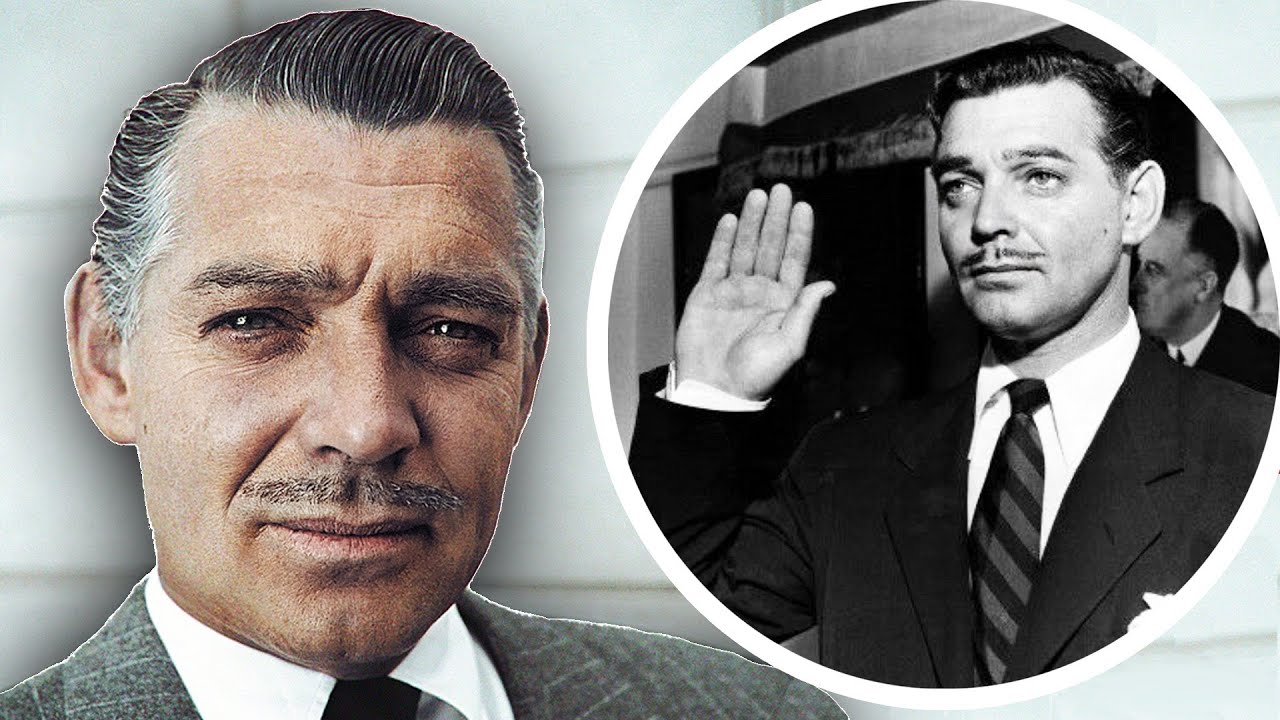
That was the favor stars like Gable enjoyed, as long as they kept making money. Born William Clark Gable in 1901, he would go on to appear in more than sixty films over a career spanning nearly four decades. His name appeared on Quigley’s annual top ten money-making stars poll sixteen times, and the American Film Institute later proclaimed him the seventh greatest male film star of classic American cinema. But the road to that status ran through a series of older women who helped him stand on his feet.
After a busy childhood in Ohio, Gable made his way to Hollywood, where he experimented with stage performances before finding a connection in Portland, Oregon. There he attached himself to Josephine Dillon, a theater manager seventeen years his senior. She became his lover, his financial provider, and his coach, paying his bills, helping him find work, and even covering the cost of repairing his bad teeth, barbering his hair, and nurturing him out of his supposedly feminine voice. For Gable, it did not seem to matter what benefit he was enjoying; every lady deserved to be cheated on, and that was what he did to each of them.
They entered Hollywood together, where Gable began as an extra in silent films and toured with a stage company. There he made another connection with the theater sensation Jane Cowell, and he rotated between his first wife and other richer, more enticing women. Before long he earned his MGM contract. Studio analysts believed MGM initially cast him in the wrong roles, planning him as a shameless villain and a low-level laborer because they did not yet understand his innate talent.
Still, Gable impressed his employers with a glimpse of what he could offer, and the studio publicity unit went to work polishing his image, emphasizing his rural background and his six-foot frame to manufacture the legendary Clark Gable. The result was a combination of the brutal and the cultured, an appeal that in the 1930s felt less European, more American, less cosmopolitan, more rugged. Gable became the luckiest man in the studio in one particular way: he was paired with nearly all the female stars at MGM at the time. Norma Shearer.
Greta Garbo. Joan Crawford. He did what one observer called theory on screen and followed up with practice off screen. Joan Crawford was already a famous star when she began working with Gable, radiating beauty and talent, and she was married to Douglas Fairbanks Jr.
Yet she could not resist the temptation. She later confessed that the first time she set eyes on Gable it was like an electric current went through her body, and that if he had not held her by the shoulders she would have dropped to the ground. That was how deep the feeling was, even though she was legally married. Their on-and-off affair endured throughout their careers, sustained by eight film collaborations that kept them in constant contact.
They were each involved in different marriages and divorces, but the bond continued until the studio finally demanded an end to their love life. The threat came when Gable’s enraged second wife was ready to make it a huge scandal in the press. If they had refused, MGM would have activated the morality clauses in their contracts, and they would have been out of jobs. Even though MGM would never have let go of two of its best talents, the threat was enough to call them to order.
In 1934, Gable starred in It Happened One Night, a wacky comedy built on jocular banter, charm, and well-organized comic timing. It came out a hit, clearing five Academy Awards for Best Picture, Best Screenplay, Best Director, Best Actress, and Gable’s first win for Best Actor. The film established him as a prominent star and a valuable asset at MGM, which is exactly why the studio went to such great lengths to cover for his less palatable escapades. While filming Call of the Wild with Loretta Young, critics said she was playing the virgin card against the will of a prowling Gable, who was still married at the time.
Loretta’s charm became very hard for him to resist, and one thing led to another. Loretta suddenly discovered she was pregnant by Clark Gable. A desperate situation unfolded with her career on the line and abortion as an option. But her Catholic faith would not allow her to leave the child behind, so she pulled off one of the smartest Hollywood tricks ever recorded.
She hid her pregnancy, fled to England as the delivery approached, and described it as a vacation. Her long absence was explained as a childhood disease she was handling secretly. She returned to her mother’s house, quietly gave birth, sent the child to an orphanage, and then went back to work. Nearly two years later she adopted her own baby and publicized it as a true adoption.
To everyone’s amazement, the close resemblance kept raising questions. Her daughter never learned who her real parents were, though the girl’s prominent ears, so similar to Gable’s, put a question mark on the story when a schoolmate hinted that Gable was her father. Still, no one ever heard the full story, because studio image fixers were working around the clock to ensure their talent never got stuck with a scandal, churning out interlaced stories that were believable enough to keep Gable’s image untainted. Beyond the Crawford affair and the secret child, reports linked Gable to Gene Harlow, Ava Gardner, and Grace Kelly, whom he dropped because he was not ready for marriage.
By 1939, Gable had divorced his second wife, Maria Langham, and married Carol Lombard, the American sweetheart, in what some described as the love of his life. With a fresh, famous, and equally glamorous wife, and though still a bit of a crook, he benefited from the love of a good woman who made him a better man. That was how the once MGM playboy was packaged and sold to the audience as Lombard’s devoted husband, even while gossip linked him to affairs with Lana Turner and others, including Mamie Van Doren, Virginia Gray, Paulette Goddard, and his Gone with the Wind co-star Evelyn Keyes. Gable’s death came at the active age of fifty-nine, a loss not just to humanity but to the teeming fans who felt his best was still unfolding.
His final on-screen appearance was in The Misfits, where he played an elderly cowboy, released posthumously in 1961. Throughout it all, the studio’s carefully constructed machinery held. The drunken accidents, the affairs, the hidden child, the reckless driving, all of it remained the stuff of whispers rather than headlines.
Gable left the industry with his image intact, not because he was innocent, but because he had the great fortune of existing in an era of concealment, before a click of a button could reveal everything.






