The scouts returned just before eleven on the night of June 24th, and their news ran through the Seventh Cavalry like a spark through dry grass. Fresh pony tracks crisscrossed the ground in every direction, converging on a point beyond the horizon. A village. A big one.
General George Armstrong Custer gathered his officers in the fading twilight, their voices too low for the enlisted men to overhear, though the tension in their postures needed no translation. The scouts were sent out again, and at eleven o’clock, the order came. Strike camp. We march tonight.
The column stumbled through pitch blackness along the right fork of the Rosebud, the air thick with the smell of sagebrush and the sweat of men and horses. For days they had pushed hard. On June 22nd they had left camp near Rosebud Creek under a scorching midday sun, marching twelve miles before pausing to rest beneath a vast, star-filled sky. By the twenty-third they were moving again at dawn, tracking a trail marked by fresh signs of native movement, driving forward until nightfall forced a halt along the rugged path.
Now, on the night of the twenty-fourth, there would be no rest. Urgency had taken hold. Dawn broke on June 25th, and the scouts raced back breathless and wide-eyed. The village is there, thousands strong.
The command scrambled into a ravine near the creek’s headwaters, just three miles from the divide where the village sprawled, its presence confirmed by the scouts’ steadfast claims. Custer, ever decisive, mounted his horse with his orderlies and galloped off to survey the terrain himself, leaving his men to wait anxiously in the shadows of the ravine. An hour later, he returned, his face etched with frustration. “I saw nothing,” he muttered, dismissing the scouts’ reports.
But Mitch Boyer, a half-Sioux guide, and the Crow scouts held firm, their voices cutting through his skepticism. It’s there, General, and the Sioux have spotted us. War parties are already moving. Custer’s expression tightened, his jaw set as he issued the order that sealed their fate.
Prepare for battle. The command advanced cautiously along a narrow creek for six grueling miles. Every rustle in the brush heightened their nerves. Then a chilling sight appeared.
A solitary Indian lodge stood at the entrance to the Little Bighorn Valley, a dead warrior sprawled at its threshold. A foreboding sign of the bloodshed to come. Five miles away, clouds of dust rose into the sky, hundreds, perhaps thousands, of horses thundering across the plains. Custer’s eyes glinted with reckless excitement.
“They’re fleeing,” he declared, misinterpreting the signs. Convinced the native forces were retreating, he scrawled a quick note to Major Marcus Reno. Move the scouts toward the dust. Attack now.
Reno, commanding his battalion, urged his men across the river at a shallow ford, cold water splashing against their horses’ flanks as they charged onto the open prairie. After a mile, he ordered them to dismount and form a skirmish line, sending their horses into a nearby thicket for safety. But the horizon soon erupted with movement. Mounted native warriors, their war cries rolling like thunder across the valley, their numbers growing with every moment.
Reno’s skirmishers opened fire, the sharp crack of rifles echoing through the air. But the enemy was swift and cunning, swinging wide to cut off Reno’s path back to the river. “Fall back to the trees! ” Reno shouted, his voice edged with panic as the situation unraveled.
The Sioux and Cheyenne pursued with relentless fury, their bullets and arrows tearing through the ranks, felling men and horses in a chaotic blur. Wounded soldiers stumbled toward cover, their cries lost in the din of battle, while the distant wails of mourning from the native village added an eerie backdrop to the carnage. One of the scouts who had been out front with the Crow when it all fell apart later recalled the desperation. “We warned Custer the Sioux had seen us.
War parties were circling like wolves, but he wouldn’t listen. Just kept pushing us forward like a man chasing a phantom. ” When Reno’s fight broke out, he saw thirteen soldiers, some bleeding, others trembling, staggering toward the trees. He grabbed them.
“Stay here and shoot or you’re done. ” They crouched in the underbrush for hours, the distant roar of gunfire shaking the ground, though they did not know it was Custer’s men being cut down. The air was thick with smoke and screams. It felt like the earth was coming undone.
Later, he led a few of them across the river to Reno’s bluffs, dodging bullets the whole way, but the terror clung to him like damp rot. For those who made it to the bluffs, the ordeal was only beginning. The heat was merciless. Thirty-six hours without water, the sun scorching them until their skin cracked.
One survivor’s tongue swelled until it choked his mouth, stifling words, leaving him gasping like a fish on dry land. They chewed grass to trick their stomachs, but it stuck to their cracked lips, useless and bitter. Men crawled to the ravine, bellies scraping the dirt, to fetch water under a hail of Sioux bullets. One man got his leg blown apart, bone jutting out like a snapped branch.
He screamed until his voice gave out, and they dragged him back, sawing off the ruin. Later that day, the wounded were dying fast, their lips bleeding, begging for relief no one could provide. Another soldier reached Reno’s bluffs late, but the scene he found was seared in fire and blood. At dawn on the twenty-sixth, the Indians attacked again, hurling stones when their ammunition ran low.
He rallied his men and charged into their line. It caught them off guard and saved a dozen lives that day. But thirst was a silent killer, breaking even the strongest among them. Some lads volunteered to fetch water from the river seven hundred yards away, with Sioux sharpshooters waiting in the trees.
One kid made it down, filled his kettle, and took a bullet through the chest on the way back. He died clutching that water like it was treasure. They got a trickle up the hill, but it was a drop in a desert of need. While Reno’s men fought for survival, Custer veered north with his battalion, splitting his forces in a daring attempt to flank the village.
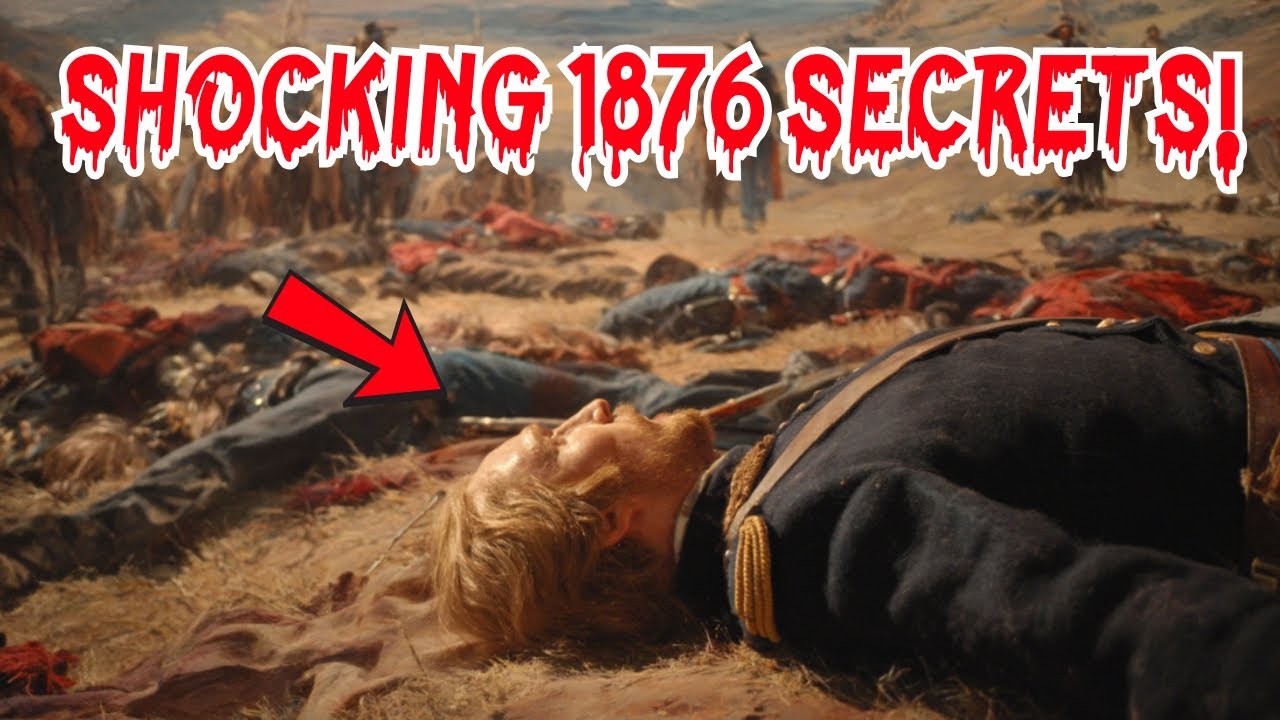
He counted on surprise, but the Lakota, Cheyenne, and Arapaho, perhaps three thousand warriors strong, led by figures like Sitting Bull and Crazy Horse, were ready. Their resolve was as unyielding as the plains themselves. Custer’s two hundred-plus men scrambled up a rise now known as Custer Hill, digging in with rifles blazing, their shots ringing out until barrels glowed and cartridges ran dry. The warriors closed in, arrows whistling, bullets finding flesh until the hill became a graveyard.
Every soldier with Custer fell, their bodies left to bake under the relentless sun. Native accounts add depth to the story. Red Horse, a Lakota warrior, later described a scene of chaos: soldiers falling like grass under a blade, their bravery no match for the tide that overwhelmed them. Legends began to swirl around the battle almost immediately.
A Cheyenne tale speaks of a white horse, perhaps Custer’s, galloping free after the slaughter, its flank streaked with blood. Whispers tell of a ghost rider, a lone trooper who escaped only to vanish into the wilds. Sioux stories weave a darker thread: a curse dooming any who disturb Custer’s remains to an early death, their spirits tied to the battlefield. Fact or folklore, these tales keep the mystery alive.
Back with Reno, the ordeal stretched into a second day. As dawn broke on June 26th, the Sioux launched fresh assaults, their waves crashing against the bluffs where soldiers huddled behind barricades of saddles, packs, and the bloated corpses of fallen horses. By mid-morning, dehydration tormented the men, their tongues thick and useless, their pleas for water rising above the gunfire. Hardtack and raw bacon sat uneaten without saliva.
It was like swallowing stones. The wounded faded, their lips splitting, some slipping into fever delirium as death approached. A group of volunteers braved a deadly run to the river, seven hundred yards across open ground with Sioux sharpshooters ready to strike. About fifty men dashed through the gauntlet, bullets kicking up dirt at their heels, and reached the ravine, which offered slight cover.
At the water’s edge, hidden warriors fired from the timber, forcing the soldiers to creep within thirty feet under the brush before darting out to fill kettles and canteens. One man fell, his chest torn open. Another’s leg was shattered, the bones splintered beyond repair. He would lose it by nightfall.
Six or seven others limped back wounded, their efforts yielding just enough water to delay collapse, though never enough to save the collective thirst. By two in the afternoon, the native attacks began to wane, though sporadic fighting continued until dusk. As night fell, the battlefield grew quiet. The warriors were gone, and the men finally watered the horses and mules, which were teetering on the edge of death, letting them graze on the sparse grass.
Reno moved his men to higher ground, fortifying a stronger position and bracing for a dawn assault that never came. When the sun rose on June 27th, the plains were empty. The silence was overwhelming, until word arrived that General Terry’s relief force was six miles away. When his troops marched into view, hoarse cheers broke out.
Rescue had arrived. Terry’s men found Reno’s survivors clinging to life on the bluffs. But the trek to Custer Hill revealed a scene of horrific carnage. Bodies were strewn across the slope, mutilated beyond recognition, scalped, disemboweled, skulls crushed by stone mallets wielded by grieving Sioux and Cheyenne women.
Captain Benteen later wrote of the anguish: “It tore at the heart. Many were so disfigured we couldn’t identify them. ” Survivors recounted a Sioux tale of elderly women wailing as they roamed the field, smashing heads in a ritual of vengeance and mourning. Four soldiers’ heads were later found in the native camp, their bodies lost to the chaos.
Grim trophies of victory. Custer himself lay among the dead, his body stripped and pierced, though accounts vary on his wounds. Scout Mitch Boyer—or perhaps another scout, depending on the telling—estimated the village had held six thousand people with three thousand warriors, led by Sitting Bull and a council of chiefs, each wielding a colored flag, red, yellow, white, blue, and black to direct their fighters. Crazy Horse likely rode among them, his band adding ferocity to the assault.
Some reckoned native losses matched the soldiers’, a testament to the Seventh’s desperate fight, though none of Custer’s men escaped the encirclement of at least twenty-five hundred warriors. Dark rumors persisted of men like Isaiah Dorman, a black scout tortured with small bullet wounds to his legs while alive, or another stripped of flesh in a slow, agonizing death. The battlefield became a theater of horror, the air thick with blood and grief. Not every soul shone with courage that day.
George Herendeen spoke of fear spreading through the ranks, pinning much of the blame on Reno’s wavering resolve, which drained the men’s will to fight. Dan Neely, called Cracker Box Dan, hid behind a box of hardtack as bullets flew. Captain Thomas McDougall, or Apparel Mickey, clung to the ground behind a pack saddle, while Billy Blake feigned a wound for two days, trembling at every sound. They were not cowards by nature, but the crucible of battle revealed their weaknesses.
Yet others rose above. Herendeen labored under the searing sun, dragging dead horses to form breastworks, firing at the enemy while his mind raced with questions about Custer’s fate. On June 25th, as smoke and dust rose from the ridge, most warriors left Reno to join the assault on Custer. Volleys rang out, likely distress signals, but no rescue came.
Dr. Porter, the surgeon, worked tirelessly tending the wounded and urging men to brave the river run despite the danger. One soldier, shot while filling his pail, shattered his leg and was dragged back screaming, a sacrifice for the few drops he had secured. Herendeen’s heart broke for Custer’s horse, Dandy, a veteran of countless rides.
Just before leaving Fort Lincoln, Custer had mused about replacing the aging steed. But now Dandy lay shot through, his soft eyes pleading as Herendeen stroked his neck. A faint whinny escaped the horse’s lips, a final cry for water for his master, and the scout wept for the loyalty lost amid the devastation. As June 26th faded, a lone Sioux sharpshooter on a hill terrorized Reno’s men, his buffalo gun claiming lives with chilling precision.
Captain Ryan finally silenced him with a long-range shot, and Herendeen later found the sniper dead behind a boulder barricade, rifle still in hand. By late afternoon, most native forces withdrew to mourn, leaving a small group to keep the soldiers pinned down. Hunger gnawed at them. They had eaten nothing since dawn on the 25th, chewing hardtack and raw bacon that stuck in their dry throats.
Exhaustion felled men where they stood, some too weary to fear death. Herendeen drew night watch, pacing outside Reno’s tent, where he overheard the major drowning his bitterness in liquor. “I wonder where the Mare of the American army is now,” Reno slurred, mocking Custer’s demise. A jab that stung Herendeen’s weary soul.
The valley below fell silent, broken only by the distant beat of tom-toms and the keening of native mourners. He strained his eyes toward the ridge, hoping for Custer’s return. But the night offered no answers, just an oppressive silence that weighed on every heart. General Terry’s arrival on June 27th sparked ragged cheers, a lifeline for Reno’s battered survivors.
But the joy soured as they surveyed Custer Hill, the scale of the loss sinking in. Over two hundred men gone, their deaths a national wound that fueled cries for vengeance. The army doubled down, and within years, the Lakota and Cheyenne were forced onto reservations, their resistance broken. Herendeen often wondered if it was all a fevered dream, longing to wake young again, tending horses with Custer’s laughter in the air.
Yet the truth anchored him. The nightmare was real, its echoes enduring in native legends. Intriguing threads emerged in the years that followed. A claim that Custer’s ghost haunts the battlefield, his white hat glowing under moonlit skies.
Speculation about a lost cache of Seventh Cavalry gold buried before the fight, awaiting discovery. Native tales warn of a Sioux curse: disturb Custer’s bones and your days are numbered, your spirit bound to the plains. Crazy Horse’s vision foretelling the battle in a dream adds a prophetic chill. These stories, true or not, fuel the legend’s fire.
Was Custer a heroic martyr or a reckless fool, dividing his command and ignoring warnings? Did Reno and Benteen fail him through cowardice, or were they powerless to act? Native voices frame it as a righteous defense of home and family. The debate endures.
And the mystery that lingers most: Did Custer take his own life, choosing death over capture, as rumors suggest? Or did Sitting Bull orchestrate a fate too grim to record, lost to history? Perhaps the full story remains out there, etched in the bones, or carried on the wind. This is not just history.
It is a wound that will not heal.






