He lay on the floor of the Trail City saloon, bleeding, his hands thrown up in a plea that bought him nothing. The man standing over him, Joe Sparrow, had waited for this moment, brooded over it, and now he walked slowly forward and put a final bullet into Print Olive’s forehead. The man they called Man Burner, the cattleman who had buried a brother and strung up two rustlers from an elm tree, was dead at forty-six, killed over ten dollars in a town that would barely outlive him. How he came to that floor begins decades earlier, in a different country entirely.
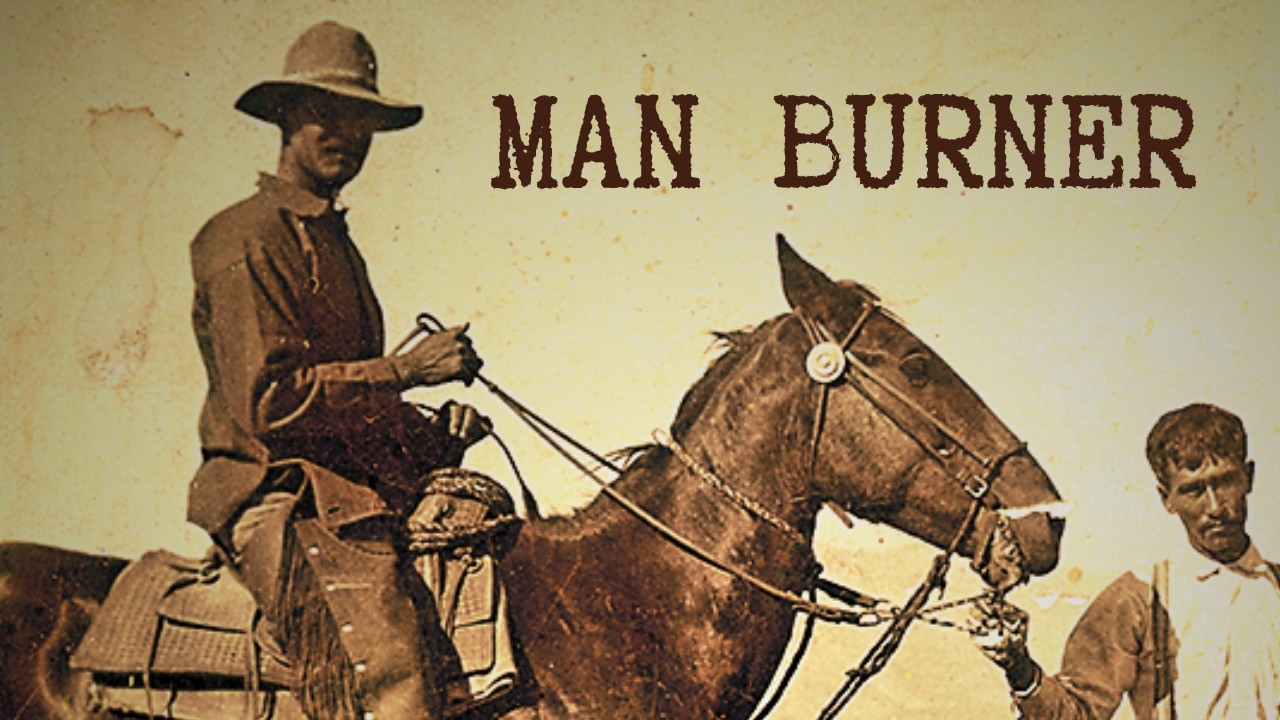
Isum Print Olive was born in Union Parish, Louisiana, in 1840, though some sources claim Mississippi. By the time he was three, his family had moved again, this time to what is now Williamson County, Texas, where his father James established a ranch. Print practically grew up in the saddle; by his teenage years, he and his brothers were already trailing herds east to market. The Civil War interrupted that life, and like many young men of Texas, Print joined the Confederates, serving in Company H of the 2nd Texas Infantry.
He saw hard combat from Shiloh, where a bullet struck him in the hip, to Farmington, Tallahatchie Bridge, the Second Battle of Corinth, and finally the Siege of Vicksburg, where he was taken prisoner. The Yankees held him only a few days before sending him back to Texas. He spent the rest of the war in Galveston, guarding the docks and fighting boredom. Something important had happened to Texas cattle while he was away.
With most men off fighting, ranches were left understaffed or abandoned entirely. Cattle ran wild, turned feral, and bred without check. By the time Print returned, millions of unbranded cattle, known as mavericks, roamed the state, free for the taking by anyone bold enough to pull them from the brush. Print and his brothers took full advantage, rounding up and branding everything they could get their hands on.
The only problem was that a great many rustlers had the same idea, and if there was one thing Print Olive could not abide, it was a cattle rustler. In late 1865, Print caught a man named Rod Murray driving some of his cattle. He drew his pistol and blew Murray out of the saddle. But Murray wasn’t dead, and he claimed he hadn’t known the cattle were stolen.
Instead of finishing him off, Print took Murray home, mended his wounds, and gave him a job. Another rustler, Dave Freeman, would not be so lucky. He, too, was caught driving Olive steers. As historian Leon Metz wrote in The Shooters, “Freeman and Print shot it out from horseback and Freeman lost.
Even though Olive was wounded in the fracas, he went to trial for murder. The jury scoffed at the charge and set him free. ” That would become a theme. Print Olive would be charged with murder many times, and almost always walked away without so much as a slap on the wrist.
There was more to life than gunfights. In February 1866, the twenty-five-year-old Print married a young woman named Louisa. They had been scheduled to wed a month earlier, but Olive was away in court fighting one of those shooting charges. The couple would have five children, one girl and four boys, though their firstborn, Mary Ann, died at just three months.
Despite that tragedy, things went well. Olive built a ranch running thousands upon thousands of head of cattle, and in the years that followed, he began trailing herds north to the railheads. Most trips passed without incident. Then came 1872, and the town of Ellsworth, Kansas.
Olive had just delivered a herd when he got into an argument with a man named Jim Kennedy, the son of Mifflin Kennedy, who had helped form the legendary King Ranch. Kennedy had lost a few too many hands of poker and accused Olive of cheating. Print advised him to get out of the saloon while he still could. Kennedy left, but his pride gnawed at him, and he returned later that evening.
According to the August 1st, 1872 edition of the Ellsworth Reporter, Kennedy “came into the room, went behind the bar, and taking a revolver, walked up in front of Olive and fired at him, telling him to pass in his checks. ” Olive threw up his hands and shouted, “Don’t shoot! ” The second, third, and fourth shots hit him: one in the groin, one in the thigh, one in the hand. Kennedy likely would have finished the job had it not been for Olive’s loyal friend, James Kelly.
Kelly was a remarkable figure in his own right. His parents, Amos and Phoebe, were former slaves who had lived near the Olives, and Print and James had grown up together. In fact, James had been named after Print’s father. Known variously as Inward Jim or Prince Bad Inward, Kelly was wholly devoted to the Olives and handy with a pistol.
As Leon Metz put it, “As a gun hand, he had few peers and might have been as well known as Billy the Kid or John Ringo had his skin been white. ” When cowboys driving cattle encountered homesteaders trying to charge a toll for crossing their land, Print would send Kelly to negotiate. One of Print’s own cowboys described the effect: “That big black boy with his gun would sure tell them pumpkin rollers. He’d roll his eyes up like a duck in a thunderstorm and grit his teeth.
Lord, he could play a tune with his teeth. When they saw Kelly, they’d come down quick enough, $25 to $5 as the price for water in our herd. ” It was Kelly who, in Ellsworth, pulled his own gun and put Kennedy out of commission long enough to get Print to safety. Olive survived that shooting, and once he healed, he and his brothers went on the warpath.
In the next couple of years alone, they killed at least half a dozen rustlers, possibly more. One Austin newspaper article from March 30th, 1876 credited Print and his brothers with killing twelve people in just three or four months. In one particularly gruesome killing, Print and his brother Jay caught a pair of thieves in the act of butchering their cattle. According to legend, they wrapped the men in fresh cowhides, tied them to a tree, and left them in the Texas sun.
As the green hides dried, they constricted, slowly crushing and suffocating the men inside. The old-timers called it the death of skins. Whether it actually happened is unclear; contemporary newspapers simply described the rustlers as having been shot to death, with one found covered in a cowhide bearing the Olive brand. Not wrapped, but covered, the brand facing outward, most likely a message.
Print was indicted for both killings and, as usual, acquitted. The local bandits, however, were growing tired of his vigilante justice, and they attacked his ranch. It was a full-blown battle. Print was wounded, his ranch house burned to the ground, and his little brother Thomas was killed, along with at least one hired hand.
The violence continued. Print caught up with one of the attackers, a man named Fred Smith, just as Smith was crossing a river. Olive waited until he was out of the water, told him to throw down his weapons, and when Smith obliged, Print was faster, putting a bullet in the bridge of his nose. A few weeks later, Print killed another man who showed up at his ranch asking for water, apparently suspicious enough that Olive pegged him for an assassin.
When the man got scared and lunged for his horse, Print cut him down. Charged with murder yet again, Print Olive was acquitted yet again. By the spring of 1877, things had gotten so bad with the rustlers that Print closed up shop and moved everyone north to Nebraska. There, in Custer County, he established a new ranch that would grow into one of the largest spreads in the entire state.
Nebraska was hardly a safe haven from rustlers; one of the West’s most notorious horse thieves, Doc Middleton, was operating in the area at the same time. Given Olive’s recent troubles, one might expect them to be mortal enemies. Instead, they got along well, or at least came to an understanding. According to Harry Chrisman’s biography The Ladder of Rivers, Print not only liked Middleton but struck a deal with him, granting him permission to use any of his camps whenever he wanted, as long as he didn’t have stolen stock with him.
Print also told him, “You can steal from me all you like, but if I catch you, which we will, I’ll stretch your neck between two saddle horses. ” Middleton agreed and, so far as is known, never caused problems. Homesteaders were a different matter. Once settled in Nebraska, Olive was just another cattle baron, one of the largest in the state, and large ranchers hated sharing land and resources with farmers.
Under the Homestead Act, anyone could claim up to 160 acres of open range, live on it, make improvements, and own it free and clear. But men like Print Olive considered that open range theirs and theirs alone, even without filing on it or legally obtaining it. When homesteaders started filing claims and putting up fences, Print got aggressive, throwing his weight around. There is one story of him pistol-whipping a farmer so hard he broke the man’s jaw, causing permanent damage.
Not everyone was easily intimidated. Two small-timers, Luther Mitchell and Amy Ketchum, seemed unconcerned about Print Olive or his threats. Both are often described as rustlers, though whether that’s accurate is uncertain, as is so often the case in these range wars, where cattle barons labeled anyone who defied them as thieves. There are sources claiming Mitchell and Ketchum were caught with close to a hundred head of Olive’s cattle.
Maybe they were thieves, maybe Print was trying to take their land, maybe both. Whatever the case, Print’s little brother Bob, who had somehow managed to get himself deputized despite facing a murder charge down in Texas, saw to it that warrants were issued for both men. When he rode out with a posse to serve them, all hell broke loose. Ketchum didn’t feel like surrendering and went for his gun.
Bob Olive drew and shot him in the left arm. That’s when Mitchell got involved and put a round through Bob’s lungs. Bob lingered for a few days before dying on November 27th, 1878. Mitchell and Ketchum fled.
Print Olive went nearly blind with rage. He offered a $700 bounty, a small fortune in those days. Two weeks later, the pair were apprehended in Loop City. A judge ordered them transferred to Custer County for trial, but they never made it.
The sheriff in charge of the escort, a man named Barney Gillan, met Olive at Plum Creek and handed over his prisoners. They were taken by wagon to a place called Devil’s Gap, some fifty miles west of Kearney, and strung up from an elm tree. Leon Metz described the scene: “Seating the two men in a wagon, Olive’s cowboys drove into the back country and paused under an elm tree with low-hanging branches. Ropes went over the limbs and nooses were roughly knotted around the trembling necks of Ketchum and Mitchell.
Mitchell began to beg and Print shot him with a rifle, the slug knocking him backwards. His boots kept him in the wagon and the rope prevented him from falling to the ground. Olive turned to the driver and said, ‘Move it. ‘ And the wagon lurched forward.
Except for the head and neck, the bodies hit the ground, but the vaqueros rectified this shortcoming by pulling the two men high into the air and snubbing the ropes off on the tree. ”
If that was not bad enough, the bodies were then doused with oil and set on fire. Whether Olive lit the match is uncertain. He later denied it, and Metz notes there is some evidence that two of Print’s employees did the burning after Print had already left the scene.
Either way, the lynching earned him the nickname Man Burner. It also caused considerable outrage in Nebraska. Olive was arrested and charged with murder, and this time he was not acquitted. Despite top-notch lawyers and rumors of jury tampering, he was found guilty and sentenced to life in the Nebraska State Penitentiary.
In the end, he served only about two years. It pays to have friends in high places. The Nebraska Supreme Court overturned the conviction because the trial had not taken place in the same county where the lynchings occurred. The case was remanded for retrial in the proper jurisdiction, but the retrial never happened.
Some witnesses had died, others had left the state, and the rest simply refused to appear. Without witnesses, the charges were dropped. Olive emerged from prison a broken man. He had lost half his cattle during a harsh winter, and whatever money remained had gone to lawyers.
Besides, many of his neighbors in Custer County were no longer welcoming. They hadn’t minded the occasional lynching, but they drew the line at burning the bodies. So Print closed up shop again and moved his family to Dodge City, where he established a new ranch, got himself elected director of the Western Kansas Stockmen’s Association, opened a butcher shop, and, per some sources, ran his own saloon. Around this same time, he lost his oldest son, Billy.
Billy had killed a man in a drunken brawl and fled to the territory, where he ironically became a rustler, before being ambushed and killed in Beaver City. Print’s latest ventures proved disastrous. His partner in the butcher shop went AWOL, leaving Print about ten thousand dollars in the hole. The winter of 1885 cost him around forty percent of his remaining cattle.
With no way to pay his debts, Print drifted west to the now ghost town of Trail City, Colorado, hoping to find a new fortune. Trail City had been founded in 1885 near present-day Holly, Colorado, as a direct response to the Kansas quarantine laws. Those laws were enacted because of Texas fever, a tick-borne illness carried by Texas longhorns that devastated local Kansas cattle. With longhorns no longer welcome in Kansas, drovers began driving their herds through eastern Colorado instead.
Trail City filled with the usual assortment of saloons, soiled doves, and gambling joints catering to cowboys. It would all be over by 1890, but for five brief years, the town produced enough violence and debauchery to shame towns twice its size. It was there that Print Olive hoped to rebuild his fortune, and he almost made it work. By September of ’85, he was part owner of a saloon and running a livery stable, while also traveling back and forth to Kansas managing what was left of his herds.
Around the same time, he co-signed a loan for an old boy from Texas named Joe Sparrow, who had come north on a drive and opened a dance hall in Trail City. Sparrow struggled to make ends meet, and when he failed to pay back the last ten dollars, Print began applying pressure. As Leon Metz wrote, “Olive threatened Sparrow and received several promises to pay, but never any money. Instead, the young deadbeat Sparrow brooded over the matter, then slipped into Trail City where he waited for Print to make one of his periodic trips to town.
”
On August 16th, 1886, Print stepped inside a Trail City saloon, and Sparrow began shooting. Olive fell to the ground wounded, threw up his hands, and pleaded for his life. Sparrow paid no heed. He walked over slowly and delivered the killing shot to Print’s forehead.
The Man Burner was finally dead. Joe Sparrow was tried for murder three times and found innocent each time. He drifted down to Mexico, where he died an old man in 1924. James Kelly, Print’s loyal friend, died in Ansley, Nebraska in 1912, never having married or had children, so far as is known.
Jim Kennedy, who had shot Print in Ellsworth, found himself in trouble again just six years later after killing a young woman in Dodge City named Dora Hand. He was tracked down by some very famous lawmen and tossed in jail, but his wealthy father bailed him out. He lived another seven years before dying of consumption or typhoid, and at the time of his death, he was under indictment for accidentally killing one of his own employees. As for Olive’s legacy, there is one more thread.
A book called The Cattlemen by Mary Sandoz, published in the 1940s, writes at length about Print Olive, as well as a black man who had a run-in with him known as Deets, and another man named P. I. Larry McMurtry, who wrote Lonesome Dove, was a student of Texas history. The parallels are hard to ignore: the outlaws in the novel who shoot, hang, and burn a couple of sodbusters; the sign Captain Call hangs reading “Man burner”; the black man riding with them who sounds a great deal like James Kelly, down to the nicknames.
The evidence, as far as it goes, suggests that Print Olive left his mark not only on the range but on one of the great stories of the American West.






