In the summer of 1908, the small Welsh mining village of Abertridwr was a place where everyone knew everyone else’s business, and the Lawrence family at number five Aberffwr Terrace was no exception. The household was cramped, with only two bedrooms for seven people, but it was a warm and respectable home. William Lawrence, the father, worked on ships sailing out of Cardiff docks and was often away at sea. His wife Alma rented rooms to two young lodgers to make ends meet: John Donovan, a railway porter, and a restless young man named Noah Patrick Collins, known to everyone as Percy.
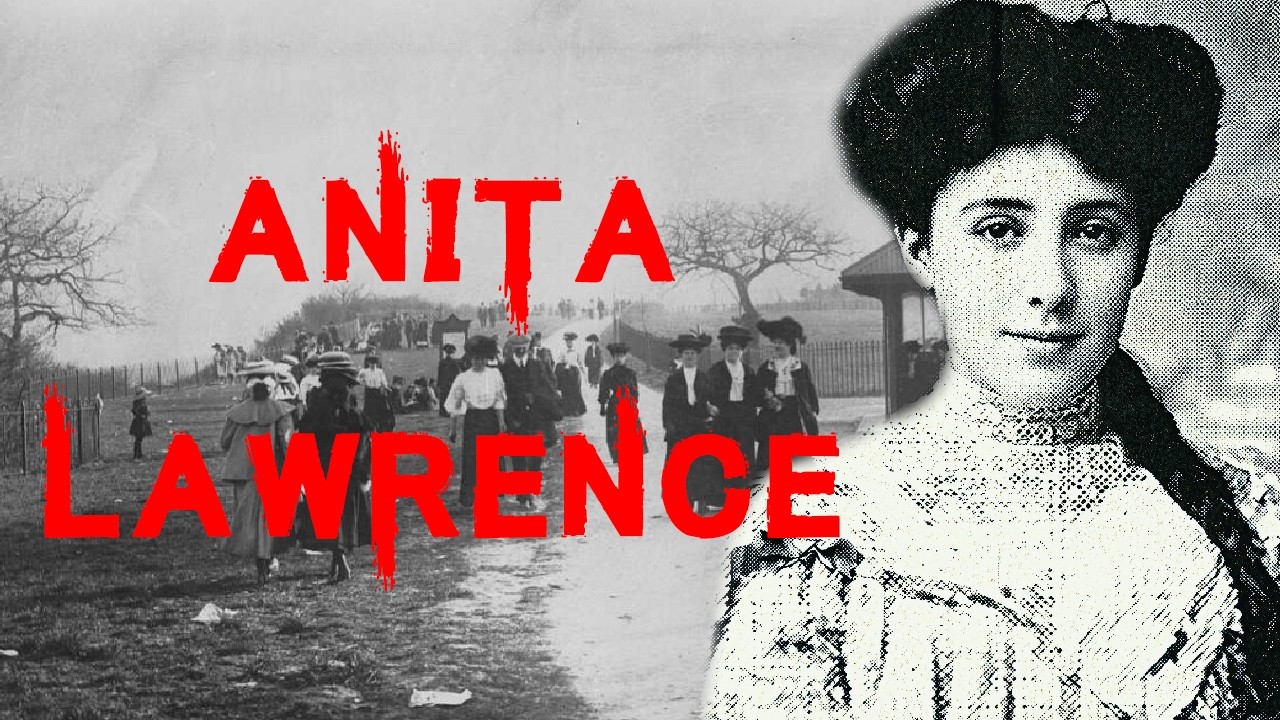
Percy Collins had not had an easy life. Born in 1883 in Cadoxton near Barry, he lost both parents as a child and was sent at age eight to Ely Industrial School, an institution for destitute children where discipline was harsh and affection scarce. He spent about ten years there, receiving only a basic education. From there he went to work in the coal mines, which he hated, and he left as soon as he could.
He joined the crew of a steamship and traveled the world, serving in the Boer War in South Africa, where he earned a medal he would later wear with great pride. He spent time picking fruit in India, worked in Boston, and wandered through Canada. By 1907, he had returned to South Wales, where his brother still lived, and took lodgings with the Lawrence family. Dorothy Lawrence, born on the 11th of August 1889, was the daughter of the house.
She was attractive, polite, and charming, and everyone who knew her thought well of her. At first, she paid little attention to the new lodger. But Percy had seen more of the world than anyone she had ever met, and he entertained her with stories of India, South Africa, America, and Canada. She found him fascinating, and eventually she agreed to walk out with him.
Her mother raised no objection as long as he conducted himself properly. Dorothy had a studio photograph taken of herself, which was fashionable among young women at the time. Percy repeatedly asked her for a copy, and although she hesitated at first, she eventually gave him one. From that moment, he carried it with him constantly and treasured it.
Despite his feelings, Percy was restless. He disliked mining and believed his future lay overseas. He told Dorothy he planned to return to America and would come back for her once he was settled. She hinted she would rather he stayed in Wales.
In November 1907, he traveled to Liverpool to board a ship for New York, but for reasons that remain unclear, he never sailed, and he returned to Abertridwr. The relationship did not survive his return. Dorothy began to socialize without him, which Percy resented deeply. When he learned she had given another young man one of her photographs, he became intensely jealous.
They argued frequently, and his temper grew aggressive. Dorothy’s friends warned her to be careful, telling her that Percy Collins was not the kind of man she should keep company with. When she began walking out with another young man, Percy told her that if he ever saw them together, he would shoot them both. She was frightened and began to avoid him as much as possible, though they still lived under the same roof.
The summer of 1908 was a lively time in Britain. London was hosting the Olympic Games, and industrial unrest was growing in the mining districts, where wages had stagnated and prices were rising. In the Lawrence household, Dorothy paid little attention to such talk. She was more interested in an upcoming holiday, and she ordered a new dress for the occasion.
She did not say exactly where she intended to go, but the thought of her enjoying herself in a place full of young men tormented Percy. On Saturday the 15th of August, Percy traveled to Cardiff feeling increasingly desperate. Convinced he could not bear to see Dorothy with another man, he tried to buy a revolver, but lacking sufficient money, he purchased two knives instead. For the next two days, he brooded over his life and what he still believed was a promise of marriage.
On the evening of Sunday the 16th, the Lawrence family gathered in the sitting room. Dorothy had spent the day with friends and cheerfully described her activities, repeatedly mentioning the name of a young man she had recently met. Percy listened silently, growing more distressed as the evening wore on. By the time he went upstairs to bed, he was convinced he had lost her for good.
The following morning, Monday the 17th of August 1908, Percy did not go to the mine. He stayed in bed late, and when he came downstairs, Dorothy was in the kitchen preparing breakfast. Her brother William and the other lodger John Donovan had already left for work, and Mrs. Lawrence was upstairs.
Percy asked Dorothy for a kiss. She refused. He asked again, and she refused again, laughing nervously and saying that Mr. Donovan might return at any moment.
Percy persisted. He demanded that she kiss him. She continued to refuse. He then walked calmly to the kitchen door and locked it.
Dorothy became alarmed. She told him to open the door and warned that if he did not, she would call for her mother. She tried to escape around the kitchen table, but Percy forced her into a corner. He took out one of the knives, demanded that she submit to his advances, and tried to intimidate her.
Dorothy cried, shielded her face with her hands, and began to scream. Knowing Mrs. Lawrence was upstairs, Percy panicked. In a desperate attempt to silence her, he stabbed her.
She gave a low cry and collapsed toward the floor. He stabbed her again, then took out the second knife and continued until one of the handles snapped off. Upstairs, Mrs. Lawrence heard her daughter scream and rushed down.
Finding the kitchen door locked, she forced her way in. Dorothy lay bleeding on the floor while Percy stood nearby. The neighbor Mr. Trowbridge was called, but before he arrived, Percy had fled the house.
He escaped through the streets, climbed over a fence, and made his way along the railway line. A signalman named Lewis Greenway saw him and noticed the blood on his hands. Percy looked up and said calmly, “Fetch the police when you like. I mean to give myself up.
”
Police arrived quickly and arrested him. Percy made no attempt to hide what he had done. He gave a detailed statement describing the murder, admitting that he had locked the door, threatened Dorothy with the knives, and stabbed her after she refused him. He was then told that Anita Dorothy Lawrence had died from her injuries.
The murder shocked the small village. Dorothy was widely regarded as a well-liked and respectable young woman, and the brutality of the crime horrified the community. Newspapers across Wales carried reports of the killing and the confession, focusing on Dorothy’s desperate resistance and on Percy’s jealousy and obsession. The trial of Noah Patrick Collins opened on Friday the 11th of December 1908 at the Glamorgan Assizes in Swansea.
He was charged with willful murder. Although he had signed a confession, he pleaded not guilty on the grounds of insanity. The prosecution submitted the confession, which was read aloud in full, and called medical experts who all testified that they believed Collins understood the nature and consequences of his actions and was legally sane at the time of the offense. They described him as brooding, egotistical, obstinate, and antisocial.
The defense, led by Mr. Ivor Bowen, argued that Collins had been driven by jealousy, emotional disturbance, and inherited mental instability. Local witnesses from Cadoxton were called. Ellen Cronin, who was seventy-seven years old, testified that she had known Collins’ grandmother and described her as strange, remembering that she threw away good potatoes while peeling them.
She also said his father was “not altogether there. ” Another witness, Mary Ann Matthews, gave similar evidence, saying that while the grandmother and father were harmless, they were known locally to be insane. The defense argued that Collins’ actions were the result of emotional disturbance and hereditary mental weakness rather than deliberate intent. When a defense medical witness, Dr.
Goodall, was asked to define insanity, he replied that he could not define it even if given a week to try, which drew laughter in the courtroom. After final arguments, the judge summed up the case, and the jury retired. They returned in only seven minutes with a verdict of guilty. Before sentence was passed, Collins was invited to speak.
He expressed no remorse. Instead, he said that a girl should not break a promise to marry a man because of her mother’s influence, and he claimed the relationship had ended because Mrs. Alma Lawrence disliked him. The judge stated that Collins had been found guilty of one of the most atrocious murders ever tried in his court and noted that the prisoner had received a fair trial and that everything that could be said on his behalf had been presented.
He sentenced Noah Patrick Collins to death. When Percy had first been arrested, police had discovered Dorothy’s photograph among his possessions. The image remained deeply important to him, and after sentencing, the judge ordered that the photograph be returned to him while he awaited execution. An appeal for mercy was submitted to the Home Secretary, Herbert Gladstone, but he refused to commute the sentence.
During his final days in prison, Collins wrote a lengthy confession attempting to justify his actions, alternating between remorse, self-pity, and attempts to excuse the murder. He spent his last night at Cardiff prison restless and unable to sleep. Early the following morning, a priest administered the sacraments. As the town hall clock struck eight on Wednesday the 30th of December 1908, Percy stepped onto the trapdoor.
The white hood was drawn over his head, the noose placed around his neck, and within seconds the execution was carried out. Public interest in the hanging was surprisingly limited. Fewer than fifty people had gathered outside the prison walls. Collins was buried in an unmarked grave within the prison grounds.
At the gallows, he was wearing the South African medal he had earned during the Boer War and carrying a locket containing Dorothy Lawrence’s photograph, the same photograph she had reluctantly agreed to give him during the happier days of their acquaintance. Whether the photograph was buried with him has never been established.






