Margaret Tudor was born on 28 November 1489 at Westminster Palace, the eldest daughter and second child of Henry VII and Elizabeth of York. Her birth came just four years after her father had seized the English crown at Bosworth Field, ending the Wars of the Roses and leaving the Tudor dynasty fragile and still consolidating its legitimacy. From infancy, Margaret existed not as an individual but as a diplomatic asset, a living symbol of alliance in a kingdom still recovering from civil war. She was raised in the royal nursery alongside her older brother Arthur, the heir apparent, and her younger brother Henry, originally destined for the church.
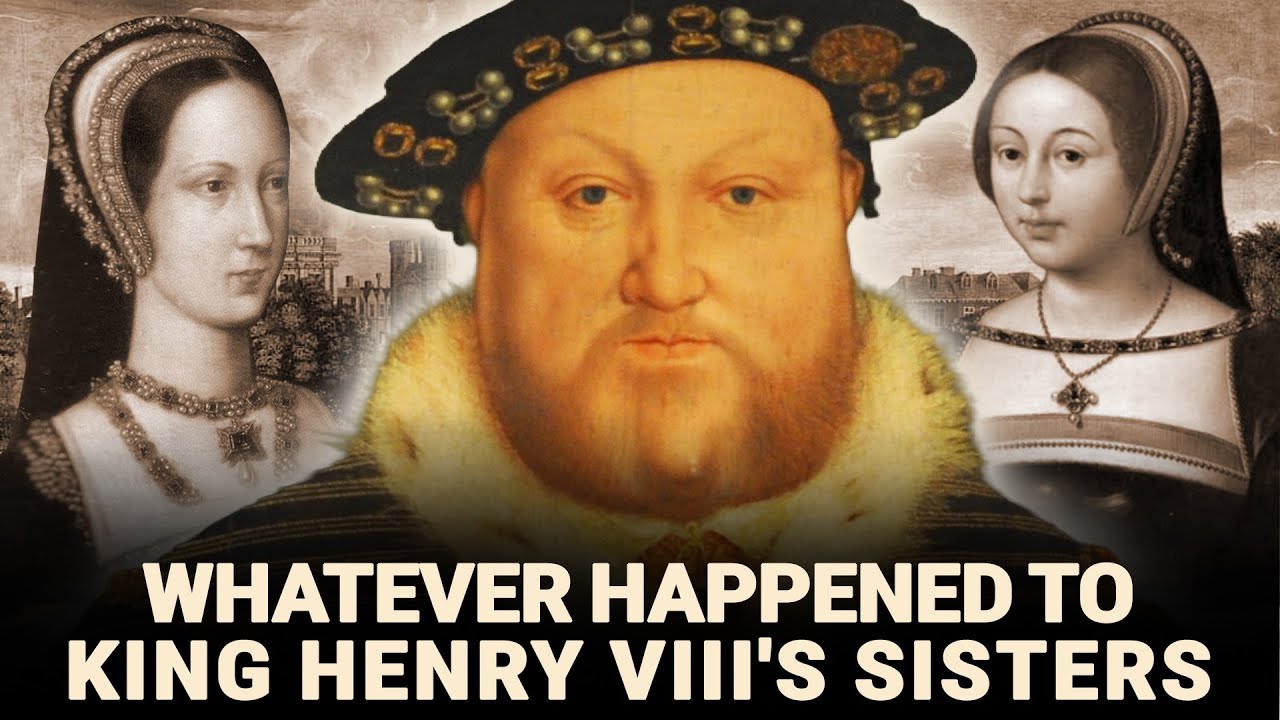
Her education centered on becoming a suitable consort: Latin, French, music, dancing, needlework, rigorous religious instruction, and the comportment expected of a future queen. Her formidable grandmother, Lady Margaret Beaufort, took a direct interest in her upbringing, instilling values of female piety and dignity. By the late 1490s, Henry VII pursued a bold diplomatic strategy: peace with Scotland, England’s traditional enemy to the north, which had long allied with France against England. In 1502, negotiations began for Margaret’s hand in marriage to James IV of Scotland, a king seventeen years her senior.
The Treaty of Perpetual Peace was signed that year, and Margaret, only twelve, was central to its terms. She married James by proxy in January 1503 at Richmond Palace, then formally on 8 August 1503 at Holyrood Abbey in Edinburgh. She was thirteen. James IV was a cultured Renaissance prince who welcomed her with elaborate celebrations, but the marriage was political, not romantic.
Her role was to bear children, support her husband, and maintain ties with England. Margaret adapted to Scottish court life, though she remained conscious of her position as a foreign queen in a historically hostile land. Her early years as Queen of Scots were marked by relative stability. She gave birth to six children between 1507 and 1514, but only one survived beyond childhood: her son James, born in April 1512.
Infant and child mortality was staggeringly common even among royalty, and Margaret bore these losses stoically while continuing to produce heirs. James IV, meanwhile, was not a faithful husband, keeping mistresses and fathering illegitimate children, a reality Margaret had to navigate with dignity. Despite this, the marriage functioned as a political partnership. Margaret’s life changed irrevocably on 9 September 1513, when James IV was killed at the Battle of Flodden, one of the bloodiest conflicts between England and Scotland.
James had invaded England in support of France, honoring the old alliance despite his marriage to an English princess. The Scottish army was annihilated, thousands of noblemen died alongside their king, and Margaret, at twenty-three, was left a widow with an infant son who was now King of Scots. She was named regent under the terms of James IV’s will, but her position was precarious from the start. She was a woman, a foreigner, and the sister of Henry VIII, the very king whose forces had killed her husband.
Scottish lords viewed her with suspicion, and factionalism erupted as powerful nobles vied for control of the young king. Her regency was conditional: if she remarried, she would lose her position. In August 1514, Margaret secretly married Archibald Douglas, Earl of Angus, a Scottish nobleman. The marriage was politically disastrous.
It invalidated her regency, alienated both English and Scottish factions, and gave Scottish lords justification to strip her of authority. The regency passed to John Stewart, Duke of Albany, a French-aligned noble who arrived from France in 1515. Margaret’s position collapsed. She fled to England with her children in 1516, seeking refuge with her brother, but her political influence had evaporated.
Her marriage to Angus deteriorated into mutual hostility; he controlled her income and restricted her movements. In 1527, she secured a papal annulment on dubious grounds and married Henry Stewart, later Lord Methven. This third marriage further damaged her reputation. Her later years were marked by financial insecurity, political irrelevance, and isolation from both her son and her brother.
Margaret Tudor died on 18 October 1541 at Methven Castle in Perth, aged fifty-one. Her death went largely unnoticed in England, overshadowed by Henry VIII’s marital and political dramas. Her legacy, however, extended far beyond her troubled life. Her son James V married Mary of Guise, and their daughter became Mary, Queen of Scots.
Mary’s son, James VI of Scotland, inherited the English throne in 1603 as James I, uniting the crowns and fulfilling the dynastic promise of Margaret’s marriage a century earlier. Every British monarch since has descended from Margaret Tudor, making her one of the most consequential figures in royal history. Mary Tudor was born in March 1496 at Richmond Palace, the fifth child and third daughter of Henry VII and Elizabeth of York. By then, the Tudor dynasty was more secure than it had been at Margaret’s arrival seven years earlier.
Mary was described by contemporaries as beautiful, lively, and charming, qualities that enhanced her value on the European marriage market. She remained at the English court into her teenage years, becoming a central figure in courtly entertainments and pageantry, trained in French, Latin, music, and dance. After Henry VIII ascended the throne in 1509, Mary became an increasingly valuable diplomatic tool. She was betrothed multiple times during her teenage years, each engagement reflecting shifting political calculations.
By 1514, Henry VIII needed an alliance with France. Louis XII, a widower in his fifties, was seeking a new wife. Henry offered his sister. Mary was eighteen; Louis was fifty-two.
The marriage was politically expedient but personally undesirable, and Mary reportedly resisted. Royal daughters had little say in such matters. The marriage was agreed upon, and Mary married Louis XII by proxy in August 1514, then officially at Abbeville on 9 October. She was crowned Queen of France at Saint-Denis on 5 November.
Her time as queen lasted less than three months. Louis XII died on 1 January 1515, likely from illness rather than any exertions related to his young bride, despite salacious rumors. Mary was left a widow before her nineteenth birthday. French custom required a dowager queen to remain in seclusion for a period to confirm she was not pregnant.
During those weeks, Mary understood that her future was being negotiated without her input. Her brother Henry VIII was calculating how best to use her in future marriage negotiations, and the new French king, Francis I, had his own political agenda. It was during this period that Charles Brandon, Duke of Suffolk, arrived in France. Brandon was Henry VIII’s closest friend, a handsome courtier and military man sent to escort Mary back to England.
There is evidence that Mary and Brandon had developed an attachment before her marriage to Louis XII. Now, with Louis dead and Mary vulnerable, they made a decision that would shock the Tudor court. In late February or early March 1515, Mary Tudor and Charles Brandon married secretly in France. The marriage was reckless and politically dangerous.
Mary was a king’s daughter and a dowager queen; Brandon was a duke of relatively low birth. The marriage violated royal protocol and defied Henry VIII’s authority. Both risked exile, imprisonment, or worse. Mary reportedly told Brandon that if she returned to England unmarried, her brother would arrange another political match, and she insisted on the marriage.
When news reached England, Henry VIII was furious, feeling betrayed by his friend and humiliated by his sister’s defiance. Mary and Brandon wrote to him pleading for forgiveness, reminding him of a promise he had allegedly made that if she married Louis XII, she could choose her second husband. Whether such a promise was genuinely made or invented remains unclear, but it provided a rhetorical foundation for their case. They also returned Mary’s substantial dowry and jewelry, a financial gesture that helped smooth relations.
Henry’s anger gradually subsided. In May 1515, Mary and Brandon were officially married again at Greenwich with Henry’s reluctant blessing. Mary was stripped of her French title but retained her status as Duchess of Suffolk. The couple was fined heavily, but they were allowed to remain in England.
Mary spent the rest of her life as Duchess of Suffolk, largely removed from the center of political power. She and Brandon lived primarily on their estates, though they occasionally attended court. Mary bore four children, two sons and two daughters. Her sons died young; her surviving daughters were Frances and Eleanor, both of whom married into the English nobility.
Mary’s relationship with Henry VIII remained cordial but distant. Her defiance had cost her political relevance, yet it had also granted her a form of personal autonomy rare among royal women. Mary’s elder daughter, Frances, married Henry Grey, Marquis of Dorset, later Duke of Suffolk. Their daughter, Lady Jane Grey, was born in 1537, four years after Mary’s death.
Jane’s position in the line of succession, derived through Frances and thus through Mary Tudor, would place her at the center of a succession crisis in 1553. Mary Tudor died on 25 June 1533 at Westhorpe Hall in Suffolk, aged thirty-seven. The cause of death is not definitively known. She was buried at Bury St Edmund’s Abbey, though her tomb was destroyed during the dissolution of the monasteries.
Her granddaughter, Lady Jane Grey, was proclaimed queen in July 1553 following the death of Edward VI, a reign that lasted nine days before Mary I seized the throne. Jane was executed in 1554, a victim of the succession politics that had shaped Mary Tudor’s own life. Elizabeth Tudor was born on 2 July 1492 at Sheen Palace, the second daughter and fourth child of Henry VII and Elizabeth of York. Her birth was noted in court records, but it did not carry the significance of her older siblings.
Arthur was the heir, and Margaret was already being positioned for a Scottish marriage. Elizabeth entered a royal nursery carefully managed but shadowed by the reality of infant mortality. She spent her brief life in the royal nursery alongside her siblings, cared for according to the rudimentary medical and hygienic practices of the time. Disease remained an ever-present threat.
Even among the nobility, approximately one in three children died before the age of five. Infections, respiratory illnesses, fevers, and digestive disorders were common causes of death, and treatments often did more harm than good. Elizabeth Tudor died on 14 September 1495 at Eltham Palace. She was three years old.
The cause of death is not recorded in surviving documents. She was buried at Westminster Abbey, the traditional resting place of English royalty, but her grave received no elaborate monument. She left no mark on history beyond the fact of her existence. Her absence shaped her family’s understanding of loss and survival, but she is the least remembered of the four sisters.
Katherine Tudor was born on 2 February 1503 at the Tower of London, the eighth and final child of Henry VII and Elizabeth of York. Her birth came at a moment of profound crisis. Her mother, Elizabeth of York, was thirty-seven, considered elderly for childbirth in the Tudor period. The pregnancy had been difficult, and Elizabeth of York had contracted puerperal fever, a bacterial infection that commonly followed childbirth in an era before antibiotics.
The condition was almost always fatal. Katherine’s first days of life were spent in a household gripped by the realization that the queen was dying. Elizabeth of York died on 11 February 1503, her thirty-seventh birthday, just nine days after giving birth to Katherine. The queen’s death devastated the Tudor court.
She had been a stabilizing presence, and her sudden death left the king bereft and the realm in mourning. Katherine Tudor did not survive long. Historical records are sparse, but it is generally accepted that she died shortly after birth, likely within days or weeks. The exact date of her death is not recorded, nor the cause.
She was never christened in a public ceremony, never given a formal place in the royal household, and no contemporary accounts describe her burial or mourning. It is likely she was interred at Westminster Abbey near her mother, though no specific record confirms this. No monument marks her grave. Henry VII had lost both his wife and his newborn daughter in rapid succession, and he never remarried despite political pressure to do so.
Four sisters of Henry VIII. Four lives shaped by the same royal household, yet unfolding in radically different directions. Margaret Tudor became a queen, a regent, and the matriarch of a line that would unite the crowns of England and Scotland. Mary Tudor defied convention, chose love over duty, and became the grandmother of Lady Jane Grey.
Elizabeth Tudor lived three years and vanished into history’s margins. Katherine Tudor was born into tragedy and died within days, leaving no trace beyond a name in a genealogy. Their stories reveal the precarious reality of royal womanhood in the Tudor period: political survival, controlled defiance, silent loss.
The dynastic history was built not only on kings and their ambitions, but on the women whose lives, choices, and deaths shaped the lineages that followed.






