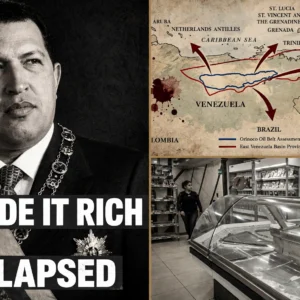
In 1970, Venezuela was one of the twenty richest nations on Earth, with an income per person higher than Spain, Greece, or Israel. Its oil exports had…
Venezuela sits on the largest confirmed oil reserves on the planet, more than Saudi Arabia, more than Iraq, more than Russia. Yet the people of this country cannot afford bread. They cannot find medicine in pharmacies. Millions have fled on foot across borders carrying everything they could fit into a single backpack. This is not … Read more
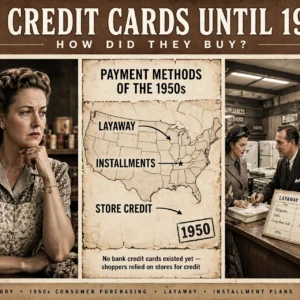
In 1856, a lawyer named Edward Clark watched a $100 sewing machine sit unsold because a typical American family earned only about $500 a year. His sol…
Americans like to imagine that the country’s long history of buying things was simple: you paid in cash, you saved up, you waited. But the truth is stranger and far older than the credit card. For the first 170 years of the nation’s existence, there was no plastic, no swiping, no tapping. Yet Americans were … Read more
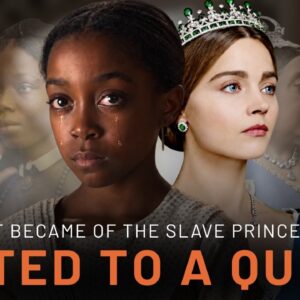
In November 1850, Queen Victoria received a gift from the King of Dahomey: a seven-year-old Yoruba girl named Aina, whose family had been wiped out an…
In July 1850, ritual fires burned in the heart of the Kingdom of Dahomey, and blood flowed as sacrificial victims were beheaded to honor the dead ancestors of a people who had built their wealth and power on the slave trade. Among those marked for death was a six-year-old girl of noble Yoruba birth, a … Read more
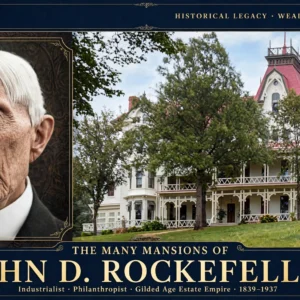
In 1865, John D. Rockefeller bought out his partners in a private auction, paying $72,500 to seize full control of Cleveland’s largest oil refinery. He called it the turning point of his career….
In 1911, the Supreme Court of the United States delivered its verdict: Standard Oil was an illegal monopoly, and it must be broken apart. The order split John D. Rockefeller’s empire into thirty-four separate companies. It was the climax of a decade of public fury and the most dramatic humiliation of a career built on … Read more
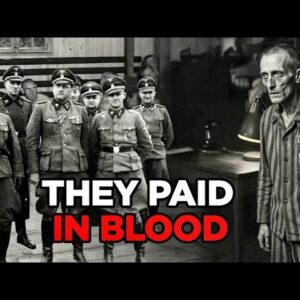
On April 29, 1945, American soldiers of the 45th Infantry Division reached the gates of Dachau and found 39 railway cars packed with thousands of corp…
The spring of 1945 did not feel like a victory for everyone inside Germany. For millions, it felt like the end of the world. As the Allied armies tightened their ring around the collapsing Third Reich, the SS leadership, long the undisputed masters of life and death inside the concentration camps, began to panic. With … Read more
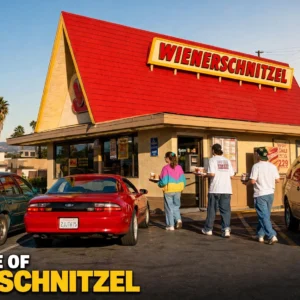
In 1961, a 23-year-old named John Galardi opened a small hot dog stand in Wilmington, California, betting that hot dogs deserved the same fast-food tr…
In 1961, a 23-year-old named John Galardi opened a small hot dog stand in Wilmington, California, with a simple proposition: hot dogs deserved the same treatment hamburgers were getting. At that moment, American fast food was still forming itself. McDonald’s had been franchising its modern format for only about six years, Taco Bell opened its … Read more
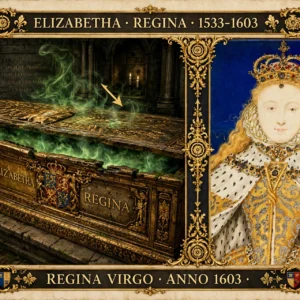
When Elizabeth I died at Richmond Palace on March 24, 1603, her body could not simply be buried. As the last Tudor monarch, she required a grand publi…
Queen Elizabeth I died on March 24, 1603, at Richmond Palace, aged about seventy, after ruling England for nearly forty-five years. Her death marked the end of the Tudor dynasty, and because she was a queen, her funeral was never a private family affair. It was a great public and political ceremony. Her body had … Read more
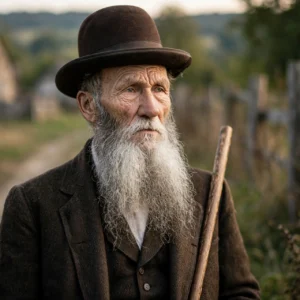
In October 1887, a 66-year-old surveyor named Obadiah Reinhardt arrived at Eberly’s Crossing, a tiny settlement deep in the New Jersey Pine Barrens, to survey land for a railroad. Three…
He was sixty-six years old in the autumn of 1887, a surveyor who had spent forty years holding a theodolite, and his right thumb was bent slightly inward from the pressure of the brass screw. He spoke English carefully, German more easily, and Pennsylvania Dutch the way a man breathes. He was not a superstitious … Read more
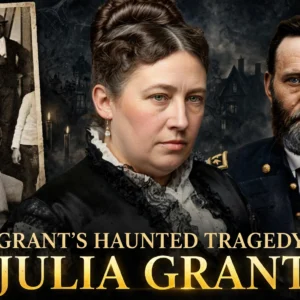
On April 14th, 1865, Julia Grant refused the hottest invitation in Washington: a night at Ford’s Theater beside President Lincoln. Her reason was personal, not political. She could not stand Mary…
The stench reached Julia before the sound did. Her husband lay in the bed above, his throat rotting from the inside, wrapped in thick towels that could not hide the decay. The former general, the man who had commanded a million soldiers and saved the Union, could no longer speak. He communicated in pencil scratches … Read more
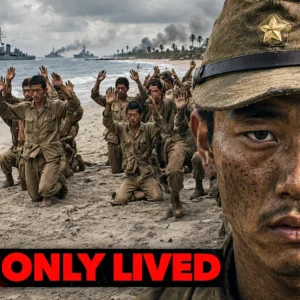
In June 1944, on an island 1,400 miles south of Tokyo, 30,000 Japanese soldiers began a battle they knew they could not win. Saipan put American B-29 …
In the first days of July 1944, with American forces closing on the northern end of Saipan, Lieutenant General Yoshitsugu Saito issued his final order. Every man capable of holding a rifle would join one last attack. There would be no surrender. Those unable to fight were to die by their own hand rather than … Read more