
A War Without Warning: How a Sudden Middle East Conflict Is Reshaping Global Energy, U.S. Politics, and Public Trust
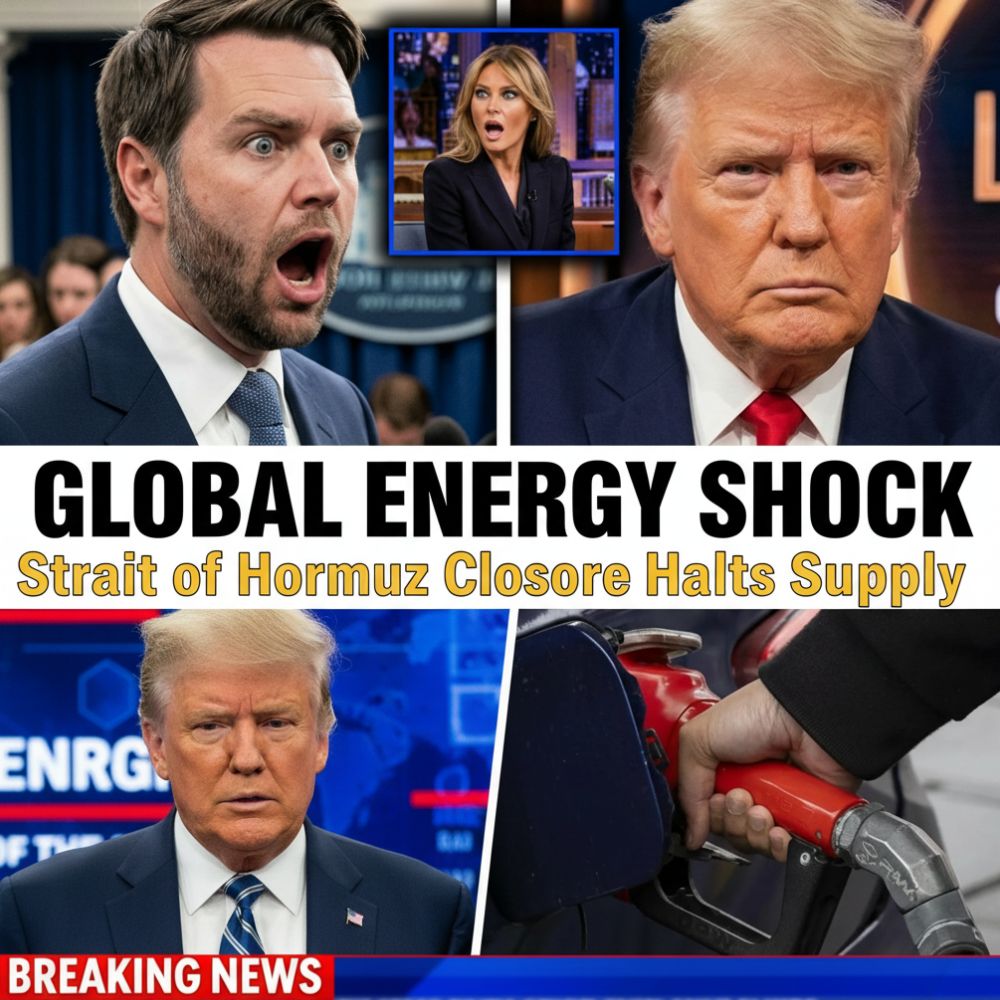
In a matter of days, a geopolitical flashpoint that has simmered for decades erupted into a full-scale crisis with global consequences. The closure of the Strait of Hormuz—one of the world’s most critical النفط chokepoints—has triggered an economic shockwave, sent oil markets into turmoil, and plunged the United States into a deeply contested war.
From the streets of Jerusalem to gas stations in Houston, the consequences of this conflict are unfolding in real time. And at the center of it all stands Donald Trump, a leader now facing mounting scrutiny over both the decision to engage militarily with Iran and the economic fallout that has followed.
This is not just another chapter in Middle Eastern instability. It is a defining moment—one that raises urgent questions about leadership, strategy, and the cost of war in an already fragile global economy.
The Chokepoint That Broke the System
The Strait of Hormuz is narrow—just 21 miles wide at its tightest point—but its importance cannot be overstated. Roughly a fifth of the world’s oil supply passes through it daily. When that flow stops, the consequences ripple across continents.
That is precisely what has happened.
Following escalating hostilities between U.S. and Iranian forces, commercial shipping through the strait has effectively halted. Tankers, once moving steadily through the corridor, now sit idle. The threat is not hypothetical—it is immediate and lethal. Insurers, faced with the risk of missile strikes or drone attacks, have either withdrawn coverage or priced it at unprecedented levels.
Premiums for a single tanker voyage have reportedly surged to as much as $1 million—an unsustainable figure that has paralyzed the market.
Energy analysts warn that this is not a temporary disruption. Even if hostilities were to cease tomorrow, restarting oil production and distribution would take weeks, if not months. Refineries need time to recalibrate. Supply chains must be rebuilt. Confidence, once lost, is slow to return.
The result: a global energy system on the brink.
The Price at the Pump—and in Politics
For American consumers, the crisis has become tangible in the most immediate way: the price of gasoline.
In just over a week, average prices have surged by nearly 50 cents per gallon nationwide. In some states, the increase is even steeper. What was once a manageable expense has become a growing burden for families already grappling with inflation.
A typical driver filling a 12- to 16-gallon tank now pays an additional $6 to $8 per visit. For households commuting daily, that adds up quickly—$60 to $80 more per month, money diverted from groceries, healthcare, or savings.
Yet the political response has been anything but reassuring.
President Trump has characterized the rising costs as “a very small price to pay” for national security objectives. The remark, delivered via social media rather than a formal address, has drawn sharp criticism from both political opponents and some members of his own coalition.
Critics argue that the administration has failed to prepare the public for the economic sacrifices of war. Unlike past presidents who addressed the nation from the Oval Office during moments of crisis, Trump has relied on brief statements and online posts—an approach many see as insufficient given the stakes.
As Peter Baker noted in recent analysis, modern presidents typically build public support before engaging in sustained military action. In this case, that groundwork appears largely absent.
A War Without Consensus
Public opinion reflects this disconnect.
Polling data suggests that a majority of Americans did not support military action against Iran at the outset. The reasons are varied: fatigue from decades of conflict in the Middle East, skepticism about the administration’s motives, and concerns about economic consequences.
Within Trump’s own political base, unease is growing. Many supporters backed him on a promise of avoiding “endless wars.” The current conflict, with no clear endpoint, challenges that narrative.
The administration has framed the operation as a necessary response to Iranian aggression, citing a long history of tensions and hostilities. But critics argue that the timing—and the lack of a clearly articulated strategy—raise more questions than answers.
Why now? What are the objectives? And how long will U.S. forces remain engaged?
So far, those questions remain largely unanswered.
The Limits of Economic Intervention
As gas prices climb, attention has turned to potential policy responses. One option frequently discussed is the release of oil from the Strategic Petroleum Reserve (SPR). However, experts caution that this is not a silver bullet.
The crude stored in the SPR is heavy and requires refining before it can be used as gasoline. That process takes time—time the market does not currently have.
Moreover, the scale of the disruption dwarfs what the reserve can offset. When a major artery like the Strait of Hormuz is blocked, the problem is not just supply—it is distribution, logistics, and risk.
The administration has also explored the idea of providing government-backed insurance to shipping companies, hoping to incentivize tankers to resume transit. But insurers have reportedly resisted, citing the impossibility of guaranteeing safety in an active war zone.
In short, there are no easy fixes.
The Hidden Costs: Farmers, Fertilizer, and Federal Spending
Beyond gasoline, the crisis is beginning to affect other sectors of the economy.
Fertilizer shipments, many of which rely on the same shipping routes as oil, have been disrupted. For American farmers—already strained by trade disputes and volatile markets—this is another blow.
Higher fertilizer costs could translate into lower crop yields and higher food prices, compounding inflationary pressures.
To address these challenges, the administration is expected to seek a supplemental spending package from Congress. Estimates suggest the total could reach $150 billion, covering military operations, agricultural support, and other emergency measures.
Such a package would add to an already significant federal deficit, raising concerns among fiscal conservatives and further complicating the political landscape.
On the Ground: A Region on Edge
While the economic impact is global, the human toll is most immediate in the Middle East.
In Israel, daily life has been punctuated by air raid sirens and missile interceptions. Cities like Tel Aviv and Haifa have experienced repeated alerts, forcing residents into shelters.
The conflict has also intensified along Israel’s northern border, where clashes with Hezbollah have resulted in casualties.
Despite the danger, public sentiment in Israel appears largely supportive of the military campaign. Even critics of Benjamin Netanyahu have expressed backing for operations against Iran, viewing them as essential to national security.
There is, however, a growing fear that the conflict could expand. Reports of intercepted missiles near Turkey have heightened concerns about a broader regional war—one that could draw in additional actors and further destabilize the المنطقة.
Leadership Under Scrutiny
As the crisis deepens, scrutiny of President Trump’s leadership is intensifying.
Supporters argue that decisive action was necessary to confront Iranian threats and assert American strength. They point to past incidents involving Iranian proxies and emphasize the importance of deterrence.
Critics, however, see a pattern of reactive decision-making and inadequate planning. They question whether the administration fully considered the economic and geopolitical consequences of its actions.
Some have gone further, suggesting that the timing of the conflict may be linked to domestic political pressures—an आरोप that remains unproven but continues to circulate in political discourse.
What is clear is that the administration now faces a dual challenge: managing a complex military operation abroad while addressing growing dissatisfaction at home.
A Fragile Future
The path forward is uncertain.
If the Strait of Hormuz remains closed, the global economy could face prolonged instability. Energy prices would continue to rise, supply chains would remain disrupted, and the risk of recession would increase.
If the conflict escalates, the consequences could be even more severe—drawing in additional countries, expanding the نطاق of fighting, and further straining international alliances.
For the United States, the stakes are particularly high. The war has exposed deep divisions within the country, raising questions about the limits of executive power and the role of public consent in military decisions.
It has also highlighted the interconnectedness of modern geopolitics, where a single flashpoint can trigger cascading effects across the globe.
Conclusion: The Cost of Uncertainty
In the end, this crisis is about more than oil, or even war. It is about uncertainty—economic, political, and انسانی.
For families at the gas pump, it is the uncertainty of rising costs.
For soldiers on the фронт, it is the uncertainty of survival.
For policymakers, it is the uncertainty of outcomes in a rapidly evolving situation.
And for the world, it is a reminder that in an era of پیچیدہ interdependence, no conflict remains contained for long.
As events continue to unfold, one thing is certain: the decisions made in the coming days and weeks will shape not only the trajectory of this war, but the مستقبل of global stability itself.