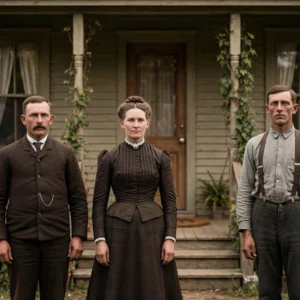
In October 1904, every door of the Petri house in Shadow Creek, West Virginia, was locked from the outside. Samuel Petri, a respected mine foreman, haNaN
In the autumn of 1904, the small mining town of Shadow Creek, West Virginia, was a settlement of roughly six hundred people, nearly all of them dependent on the Blue Ridge Coal Company for their livelihood. The town was unremarkable, a cluster of wooden buildings at the edge of the forest. What made it notable … Read more
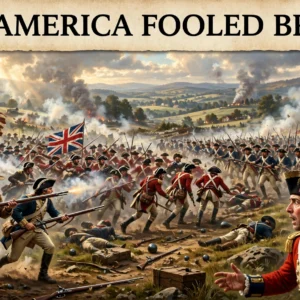
On January 17, 1781, British officer Banastre Tarleton rode toward a South Carolina cattle pasture with over 1,000 of the British Army’s best-trained soldiers, hunting a ragged American force half…
On January 17th, 1781, Banastre Tarleton rode toward a small cattle-grazing field in upstate South Carolina with over 1,000 of the best-trained soldiers in the British Army. His target was a ragged force of American troops, half of them untrained militia, men with a reputation for running at the first sight of a bayonet charge. … Read more
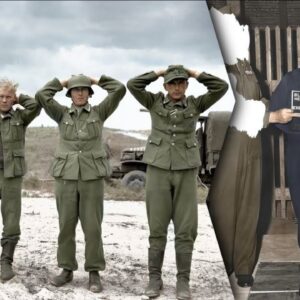
In August 1941, German forces occupied Bila Tserkva, Ukraine, and SS killing units began murdering the town’s Jewish adults. After two days of mass shootings, around 90 Jewish children, some just…
In late August 1941, a military chaplain attached to the German 295th Infantry Division was led to a building in the occupied Ukrainian town of Bila Tserkva. German soldiers stationed nearby had drawn his attention to the site, disturbed by a sound that had not stopped since noon the previous day: the crying of children. … Read more
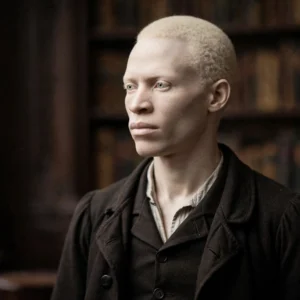
In 1847, seven members of a South Carolina plantation family were found dead in their beds, their throats cut with surgical precision. Nothing was stolen. No one heard a scream. The only person…
On the night of September 14th, 1847, inside a plantation house twelve miles south of Charleston, South Carolina, seven members of the Grantham family were found dead in their beds. Their throats had been cut with surgical precision—clean, deliberate, unmistakably practiced. There were no signs of struggle, no shattered furniture, and no screams reported by … Read more
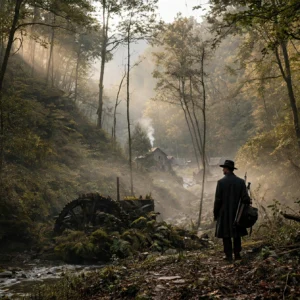
In 1927, a Knoxville surveyor named Ossian Kiddering was sent into a remote Kentucky hollow to mark timber boundaries for a lumber company. His guide, an old mountain man, stopped at a mill wheel…
Some places on the map keep their old shape beneath the new. You drive down a paved road that turns to gravel, the gravel turns to dirt, and the dirt turns into something the county no longer bothers to name. There, exactly there, a certain kind of story begins. One of those places is where … Read more
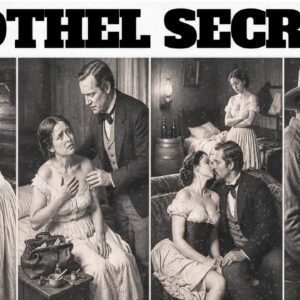
In 1879 Leadville, Colorado, a woman knelt over a tin basin in a crib on State Street, her knuckles split from the cold. She paid rent on that narrow room. When her body began to change beneath a…
The knock came just after the music stopped. She had been timing herself to the piano all night, holding her breath between songs, pressing her face into the straw tick mattress whenever a pain came, because the house was working the way it worked every night and it would not stop for her. The rule … Read more
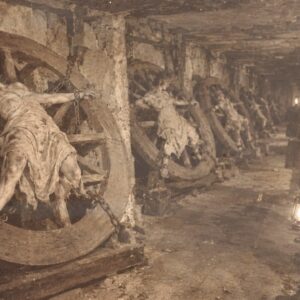
In October 1902, federal surveyor Thaddeus Breen emerged from a Utah canyon carrying a torn ledger page listing 39 women by name and the stone cell number where each was held. The settlement,…
In the autumn of 1902, a federal land surveyor named Thaddeus Breen emerged from the Wasatch Front in a corner of Juab County, Utah, that had been missing from the county map records for eleven years. He carried a torn page from a bound register, a page written in neat administrative hand, listing thirty-nine women … Read more
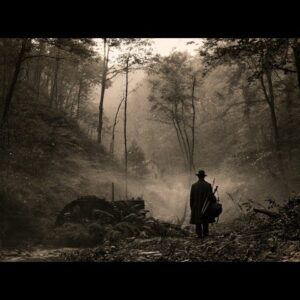
In October 1971, Catherine Alder knelt in a chapel at Branic Mission, West Virginia, and surrendered her name. She became Sister Mary Theres, the 112th woman to take vows at a mountaintop mission…
Katherine Marie Alder knelt on the stone floor of the chapel at Branic Mission and waited for the shape of her grief to become a body. It was the night of the 28th of November 1971, seven weeks into her new life, and the voice from below the chapel floor had just called her name. … Read more
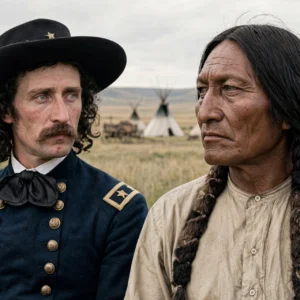
In November 1875, an Indian Bureau inspector filed a report claiming the Lakota were murdering settlers and deserved punishment. There was just one problem: no evidence supported it. Days earlier,…
The summer campaign against the Lakota was barely a month old when the order came down from the White House, and it had nothing to do with military strategy. President Grant wanted George Armstrong Custer off the expedition. Custer had testified before Congress against the president’s own brother, and Grant retaliated by yanking the lieutenant … Read more

On August 9th, 48 BC, Julius Caesar stood before 22,000 half-starved legionaries and prepared to face Pompey the Great’s 45,000 veteran soldiers and 7,000 cavalry on the plain of Pharsalus. His…
At approximately ten o’clock on the morning of August 9th, 48 BC, Julius Caesar gave a slow, deliberate pull at the bridle of his horse and turned to watch the 3,000 men of his hidden fourth line rise from the tall grass of the Thessalian plain. They moved as one, veterans of the 10th Legion, … Read more