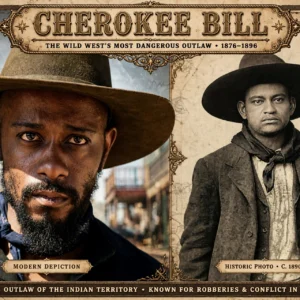
In July 1895, Crawford Goldsby—known across Indian Territory as Cherokee Bill—sat in a Fort Smith jail cell awaiting execution for murder. He had not surrendered quietly. Somehow, a smuggled…
On July 26, 1895, a revolver appeared in the hands of a condemned man inside the jail at Fort Smith, Arkansas. Crawford Goldsby, known across the Indian Territory as Cherokee Bill, had somehow obtained a smuggled firearm, passed to him by a trustee. Within moments, the cellblock erupted in gunfire. Cherokee Bill and the warden … Read more
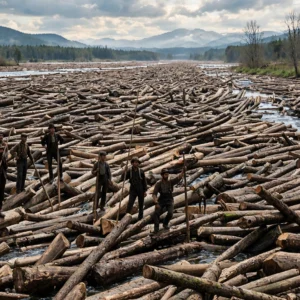
On May 5, 1886, a single Norway pine wedged between two rock outcrops at Devil’s Elbow on the St. Croix River, and within six hours, hundreds of thousands of logs had piled against it. The jam…
The explosion rolled down the river valley like a low, long thunder that would not stop. It was June 24th, 1886, and the blast that tore through the base of the log jam at Devil’s Elbow was the largest charge any of the blasters had yet set. Fifteen miles away, in Stillwater, Minnesota, the sound … Read more
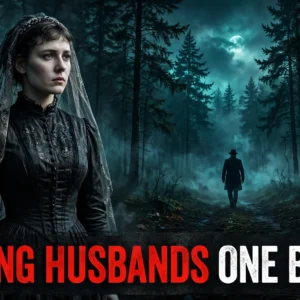
In 1893, investigators searching a Sullivan County farmhouse lifted the floorboards and found the bodies of Margaret and Sarah McQuillan hidden beneatNaN
By the early 1890s, the farm of Paul Halliday in Sullivan County, New York, had become a place no one wanted to visit. The stench of rot seeped through the farmhouse, and flies swarmed the property. Neighbors who had once tolerated the chaos emanating from the farm now kept their distance. When investigators finally lifted … Read more
In 1863 Louisville, struggling actress Pauline Cushman accepted $300 from two captured Confederate officers to raise a toast to Jefferson Davis on stage. She reported the offer to Union military…
The shout went up at dusk, just as she had planned. A voice from the road, high and urgent, carrying through the trees: “The Yankees are coming! The Yankees are coming! ” In the Confederate camp, men scrambled. Officers barked orders. A skirmish line formed, rifles raised, eyes fixed on the dark fringe of woods … Read more

In 1863, Elizabeth Van Lew helped two Union soldiers escape from Libby Prison in Richmond, the capital of the Confederacy, right under the noses of Confederate guards. When the soldiers reached…
In the spring of 1865, with Union troops closing in on Richmond, a mob gathered in the street below Elizabeth Van Lew’s house. The Stars and Stripes was flying from her roof, the first Union flag raised in the Confederate capital. Men and women who had endured four years of war, who had lost sons … Read more
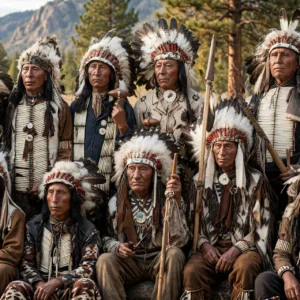
On December 26, 1862, thirty-eight Dakota men walked onto a single scaffold in Mankato, Minnesota, before four thousand spectators and two thousand soldiers. Their hands were bound, but they…
December 26th, 1862. Mano, Minnesota. Ten o’clock in the morning. Thirty-eight Dakota men walk onto a scaffold built to kill them all at once. Four thousand spectators watch. Two thousand soldiers stand under martial law. White muslin hoods cover painted faces. Their hands are bound, but they reach for each other anyway, holding on. They … Read more
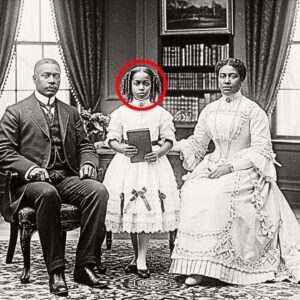
In 1895 New Orleans, archivist Vivien Rouso examined a formal portrait of the prosperous Bumont family, then noticed a shadow at the young girl’s throat. Under high-resolution scanning, the marks…
Dr. Vivien Rouso wiped her forehead and adjusted the desk fan in her cramped office at the Louisiana Historical Archives. August in the city was relentless, but the climate-controlled vault where the photographs were stored remained mercifully cool. She had spent three months cataloging the TME collection: hundreds of photographs, documents, and artifacts from one … Read more
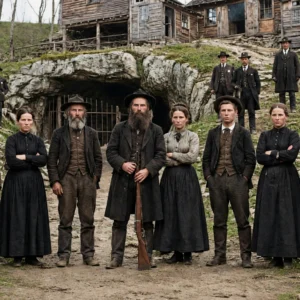
In 1851, a farmer named Cletus Warren climbed the trail into Morning Fork after a lost calf and found only its severed head, eyes and tongue removed, NaN
The Gent family arrived at the edge of the Ozark Mountains in 1847, and within four years, the first warning was left at the base of their land: the severed head of a neighbor’s cow, eyes and tongue removed, a strange symbol carved into its forehead. The farmer who found it understood the message without … Read more

On June 24, 1944, Saburo Sakai flew into the middle of 15 American fighters before realizing his mistake. Half-blind in one eye, he survived twenty miNaN
Saburo Sakai climbed away from Iwo Jima on the afternoon of June 24, 1944, with 15 American fighters trying to kill him and the vision in his right eye already gone for good. He had mistaken the formation for friendly aircraft and flown straight into the middle of it before he understood his error. For … Read more

In 1971, Hugh Hefner paid just over a million dollars for a five-acre Gothic mansion at 10,236 Charing Cross Road, the largest residential real estate transaction in Los Angeles history at the…
The gates at 10,236 Charing Cross Road had always done two things at once. They kept the world out, and they kept the people inside in. For decades, that double purpose had been the mansion’s quiet engine, the mechanism that let an empire run on fantasy while the reality behind it stayed hidden. It took … Read more